· 5 min read
Hair Extensions in Lahore: Care, Cost & Longevity Guide
Thinking about hair extensions in Lahore? Here's an honest breakdown of what they really cost, how long they last, and the daily habits that keep them looking salon-fresh.
Hair extensions have quietly become one of the most-requested services at our chair — not just for brides, but for working women in DHA who want fuller hair for a shoot, a wedding season, or simply because their natural hair has thinned after pregnancy or years of colouring. The problem is, most women in Lahore walk in with wildly different expectations of what extensions cost, how long they last, and how much daily effort they actually need. Let's clear that up properly.
The Main Types of Extensions Available in Lahore
Not every method suits every head of hair. The right choice depends on your natural density, lifestyle, and how often you're willing to come back for maintenance.
Clip-Ins
These are the entry point. You clip them in for an event and remove them at night. Ideal for women who want occasional volume for a mehndi or dinner but don't want a commitment. Zero damage when applied correctly, and they can last a year or more with careful storage.
Tape-Ins
Currently the most popular semi-permanent option in Lahore. Thin wefts are sandwiched into your natural hair using medical-grade adhesive tape. They lie flat, look natural, and are gentle on fine South Asian hair. Reapplication is needed every 6–8 weeks as your hair grows out.
Keratin Bond (Fusion) Extensions
Small strands of hair are fused to your own using a keratin bond. These last longer between refits (3–4 months) but require skilled removal to avoid damage. Best suited to medium-to-thick hair.
Micro-Ring / Nano-Ring
No heat, no glue — tiny beads clamp the extension to your natural strand. A great option if your scalp is sensitive to adhesives, though the beads can slip if your hair is very silky or freshly keratin-treated.
For a proper consultation on which method suits your hair type, our hair extensions service starts with a strand test and density assessment before any product is ordered.
What Extensions Actually Cost in Lahore
Let's talk numbers honestly, because vague pricing is how women end up disappointed. Extension cost is driven by three things: hair quality, quantity, and application method — not the salon's marketing.
- Hair quality: 100% Remy human hair (cuticles intact, running in one direction) is the only kind worth buying if you want them to last. Synthetic or non-Remy blends tangle within weeks and cannot be heat-styled.
- Quantity: A subtle volume boost might need 50–75 grams. A dramatic length change on medium-thick hair often needs 150–200 grams.
- Method: Clip-ins are the most affordable per gram because there's no application labour. Keratin bonds and tape-ins add skilled application time.
As a rough guide in Lahore's premium salon market, expect to invest anywhere from PKR 40,000 for a modest clip-in set to PKR 150,000+ for a full head of high-grade tape-in or bond extensions with application. Anyone quoting dramatically less is almost certainly using low-grade hair — you'll notice within a month.
What You're Really Paying For
- The raw hair itself (the biggest cost).
- Colour-matching, which often requires custom toning.
- Application time — a full head of tape-ins takes 2–3 hours.
- The maintenance appointments included in your package.
How Long Extensions Actually Last
This is where honest expectations matter. The hair itself on premium extensions can last 9–12 months if you care for it well. But the application has its own timeline:
- Clip-ins: Reusable for a year or more; only worn on event days.
- Tape-ins: Need to be moved up every 6–8 weeks as your hair grows. The same hair can typically be reused 2–3 times.
- Keratin bonds: Full removal and reapplication every 3–4 months.
- Micro-rings: Tightening every 8–10 weeks.
Lahore's climate is a factor most people underestimate. Our humid summers and hard water make extensions more prone to dryness at the mid-lengths and tangling at the nape. Winter is easier on them, which is why many brides plan their extension appointments for October through February.
Daily Care That Actually Protects Your Investment
Extensions don't receive natural oils from your scalp the way your own hair does. That means they dry out faster and need a slightly different routine.
The Non-Negotiables
- Sulphate-free shampoo, always. Sulphates strip the cuticle and shorten extension life dramatically.
- Condition mid-lengths to ends only. Never let heavy conditioner sit on the bonds or tapes — it loosens them.
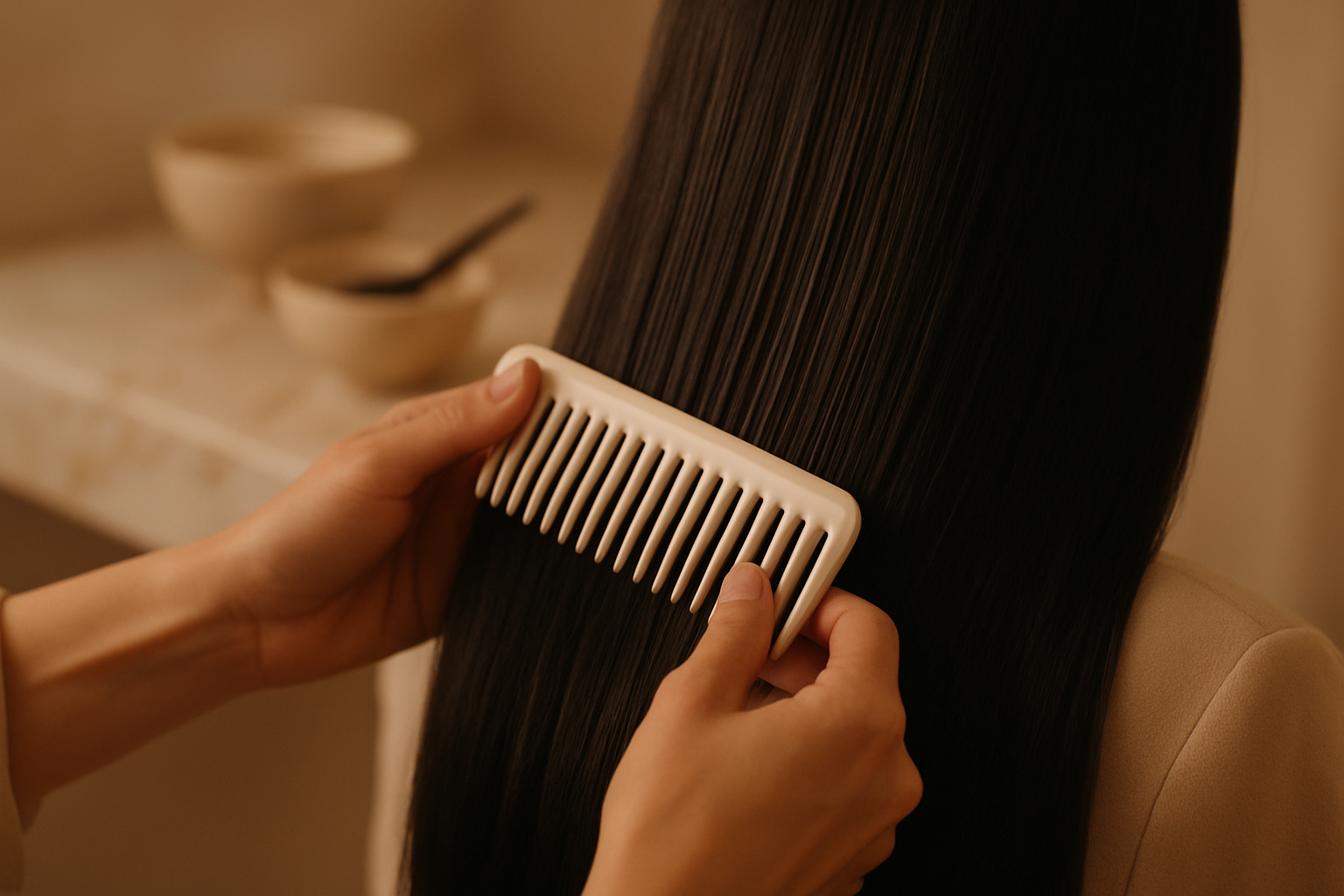
- Brush with a loop brush twice daily, holding the hair at the root to avoid tugging on the attachment points.
- Tie hair in a loose braid before sleeping. Silk or satin pillowcases genuinely help.
- Heat protectant before any styling. Even Remy hair burns.
The Things That Quietly Ruin Extensions
- Swimming in chlorinated pools without tying hair up and pre-wetting with clean water.
- Applying argan oil directly to bonds (it dissolves adhesive).
- Blow-drying the roots on high heat right at the attachment point.
- Skipping salon maintenance appointments to "save money" — the damage costs more to fix.
We often pair extension aftercare with a gentle in-salon hair treatment every 6 weeks to keep both your natural hair and the extensions in condition.
Colour-Matching and Blending for Pakistani Hair
This is the part most women don't ask about until it's too late. South Asian hair is rarely one flat colour — there are warm undertones, sun-lightened ends, and often previous colour build-up. Extensions ordered from a generic "dark brown" chart almost never match on the first try.
A proper colour-match involves:
- Assessing your natural hair in daylight, not salon lighting.
- Ordering hair one shade lighter if you plan to gloss it down.
- Custom-toning the extensions before application if needed.
- Cutting and layering the extensions into your own haircut so there's no visible seam.
If you're already booked for colour work, it's smart to do your hair colouring first, let it settle for two weeks, and then match extensions to the final result.
When Extensions Are Worth It — And When They're Not
Extensions are genuinely worth the investment if you have thinning hair you're self-conscious about, if you're growing out a short cut for a wedding, or if you want photograph-ready volume for a specific season. They're a wonderful confidence tool.
They are not the right choice if your hair is currently very damaged from bleach, if you have an unmanaged scalp condition, or if you can't commit to the aftercare routine and maintenance appointments. In those cases, a course of strengthening treatments first — followed by extensions later — gives a much better result.
Book a no-pressure consultation before committing. Good extension work is a small design project, not an off-the-shelf purchase.