· 5 min read
Hair Fall Reasons & Salon Treatments That Genuinely Help
From Lahore's hard water to postpartum shedding, here's what actually causes hair fall — and the salon treatments that make a real, visible difference.
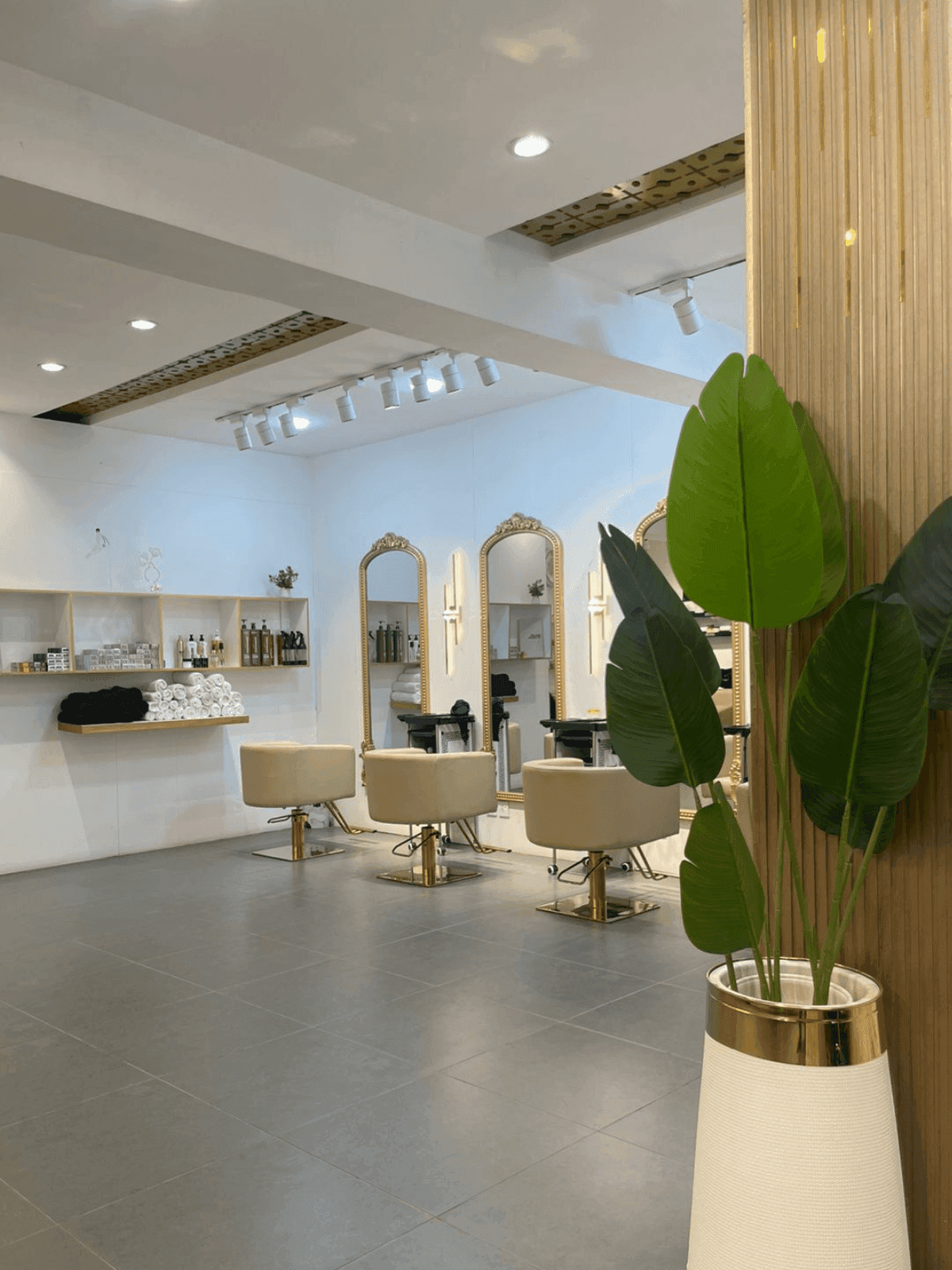
If you're finding hair on your pillow, your dupatta, the bathroom floor, and the shower drain all in the same day — you are not imagining it. Hair fall is one of the most common concerns walking through the doors of Rabbiz Salon in DHA Phase 3, and it's rarely a single-cause problem. It's usually a stack of small things: Lahore's hard water, stress, iron levels, over-styling, and a scalp that hasn't been properly cared for in years. The good news? Once you identify the real reason, the right salon treatment can genuinely shift things within a few months.
Here's an honest, practical breakdown of what causes hair fall in women in Pakistan, and which professional treatments actually deliver — versus the ones that just feel nice.
First, Understand What 'Normal' Shedding Looks Like
Losing 50 to 100 strands a day is completely normal. Hair grows in cycles, and every strand eventually sheds to make room for a new one. What's not normal:
- Visible thinning at the parting or crown
- Clumps in your brush or during a wash
- A ponytail that feels noticeably slimmer than it did last year
- Baby hairs that used to grow back but no longer do
- A widening centre parting
If you're ticking two or more of those boxes, you're in territory that needs real intervention — not just another bottle of oil.
The Real Reasons Behind Hair Fall in Lahore Women
1. Hard Water and Mineral Buildup
Lahore's water is notoriously hard. Calcium, magnesium and chlorine build up on the scalp and hair shaft over months, making strands brittle and blocking follicles. You'll often see this as dullness, tangling, and hair that snaps mid-length. A booster shower filter helps, but you also need periodic deep clarifying at the salon.
2. Iron, Vitamin D and Ferritin Deficiencies
This is huge in Pakistan and often overlooked. Low ferritin (your body's iron storage) is one of the most common causes of diffuse hair thinning in women aged 20–45. If your hair fall has been going on for more than three months, get a blood panel done — ferritin, Vitamin D, B12, TSH. No salon treatment can outperform a nutritional deficiency.
3. Postpartum and Hormonal Shifts
A lot of women panic three to five months after childbirth when hair starts falling in handfuls. This is telogen effluvium — a temporary phase where hormones normalise and hair that stayed in growth phase during pregnancy sheds together. It usually resolves in 6–9 months, but scalp treatments can dramatically speed regrowth.
4. Tight Styling and Traction
Daily tight ponytails, heavy extensions worn without breaks, and constant heat styling create traction alopecia — thinning right at the hairline and temples. If you can see your scalp more clearly at the front than you used to, this may be why.
5. Chemical Overload
Back-to-back colouring, bleaching, keratin and rebonding without recovery windows damages the cuticle and weakens the shaft. Hair doesn't fall from the root here — it snaps mid-length, which mimics hair loss.
6. Stress and Sleep
Cortisol pushes hair follicles into resting phase. If you've had a hard six months emotionally, expect to see shedding show up two to three months after the stressful period, not during it.
Salon Treatments That Genuinely Help
Not every 'hair fall treatment' on a salon menu is worth your money. These are the ones we've seen deliver real results at Rabbiz.
Deep Scalp Detox and Clarifying Cleanse
Before anything else works, the scalp needs to be clean at follicle level. A professional scalp cleansing treatment removes mineral buildup, sebum plugs and product residue that home shampoos simply can't lift. Most women notice their hair feels lighter, fuller and cleaner for weeks after a single deep session — and topical serums finally start absorbing properly.
Protein & Keratin Bond Repair
If your hair fall is really breakage in disguise, structural repair matters more than scalp work. A professional protein or keratin bond treatment rebuilds broken disulphide bonds along the shaft. Our in-salon hair treatments are customised — over-proteining fine hair makes it worse, so the dose matters.
Hair Spa and Nourishment Rituals
A proper salon hair spa isn't just a fancy oil massage. Done well, it combines steam, targeted scalp massage to stimulate blood flow to follicles, and a mask matched to your porosity. Booked monthly, it noticeably slows shedding within 8–10 weeks. Explore our full hair care menu for options tailored to thinning, dryness or oily scalp.
Trims — Yes, Really
This sounds too simple to matter, but split ends travel upward and cause breakage that looks like hair fall. A dusting every 8–10 weeks preserves length far better than avoiding scissors.
Volume Solutions That Don't Damage
If thinning is already visible and you have a wedding or event, gentle clip-in or tape-in hair extensions can give you fullness without pulling on fragile hair — provided they're applied and removed by a trained hand. Improperly fitted extensions cause more hair fall, not less, so this is one to only do professionally.
What You Should Do at Home Between Salon Visits
- Wash with lukewarm water, never hot
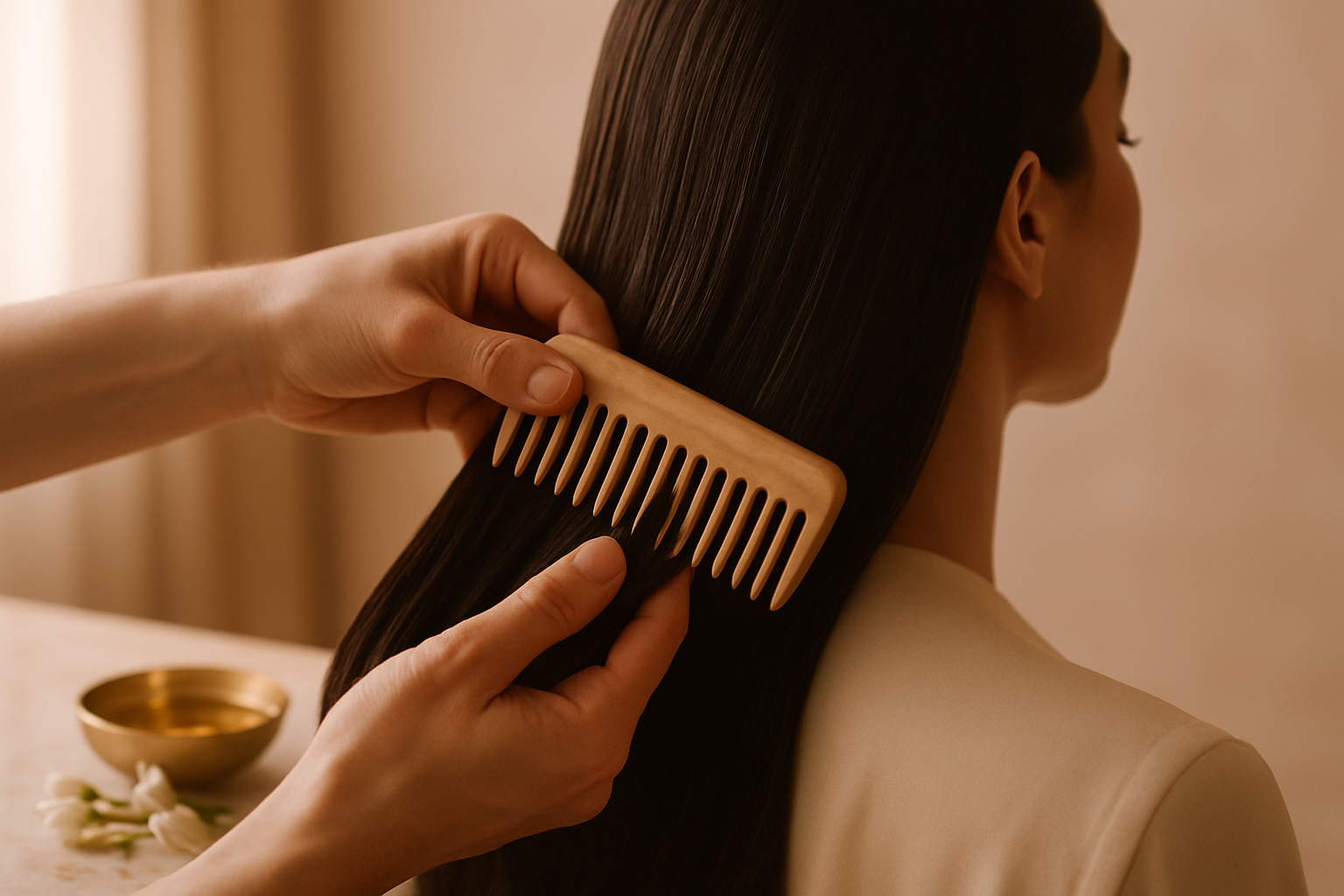
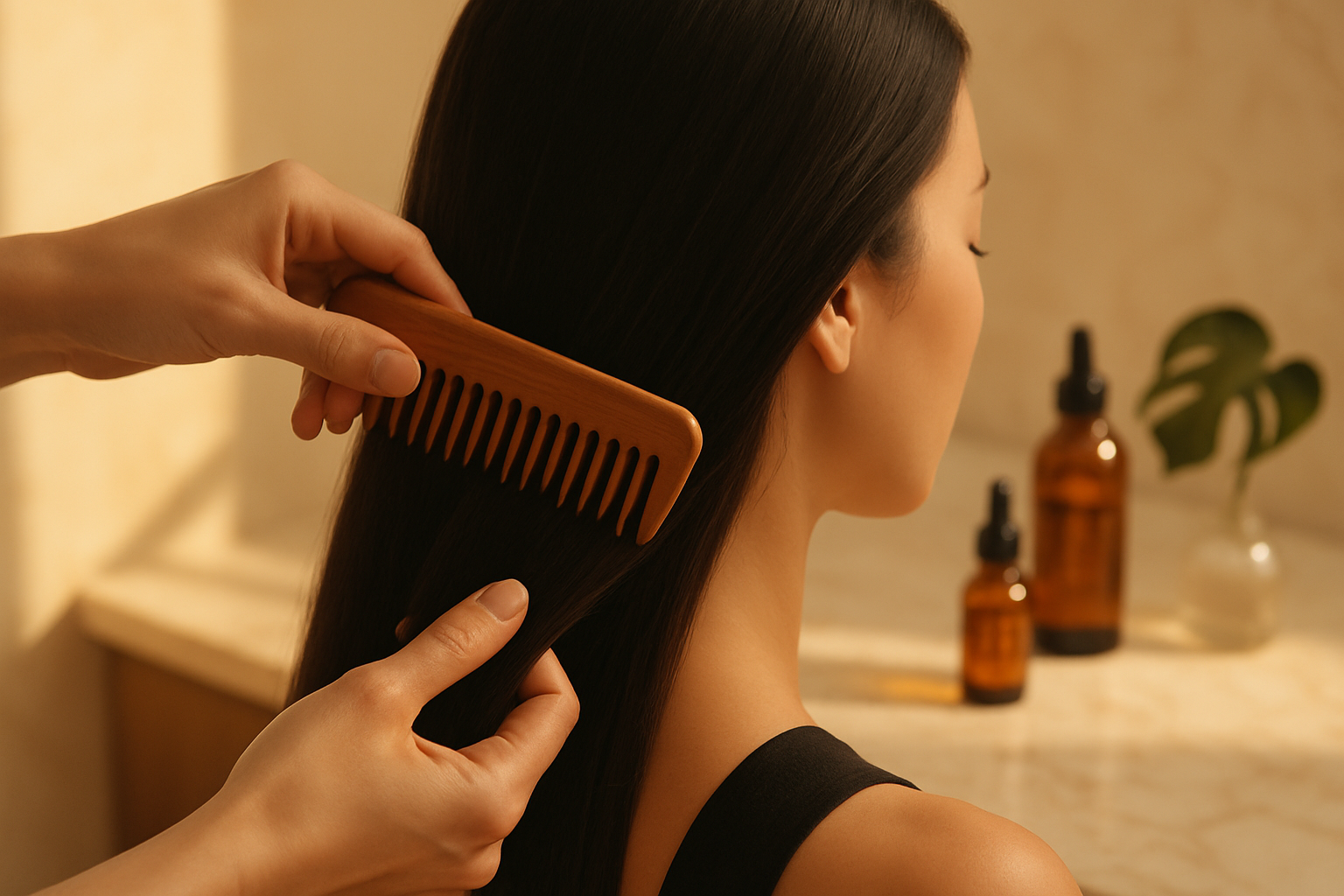
- Use a wide-tooth comb on wet hair, starting from the ends up
- Silk or satin pillowcase to reduce friction while you sleep
- Loose braids or low buns instead of tight ponytails
- One oil massage a week — coconut, almond or argan — for 20 minutes before wash, not overnight
- Protein-rich meals (eggs, lentils, chicken, yogurt) daily
- Stop tying wet hair up
When to Book a Consultation
If you've been shedding heavily for more than three months, if your parting is widening, or if you're recovering postpartum and want to speed regrowth, book a scalp consultation before choosing a treatment. A quick look under proper light tells us whether you need clarifying, protein repair, or a referral for bloodwork first. Guessing wastes money.
Hair fall is rarely permanent when you catch it early and address the actual cause. Give your scalp the same care you give your skin, and the results will surprise you.