· 5 min read
Sugar Wax vs Fruit Wax vs Traditional Wax: Gentlest Pick
Three waxes, three very different experiences on Pakistani skin. Here's how sugar, fruit and traditional wax really compare on pain, redness and ingrown hairs.
If you've ever walked out of a wax appointment with angry red bumps that lingered for days, you already know: not all wax is created equal. The jar matters. The temperature matters. The technique matters even more. At Rabbiz Salon in DHA Phase 3, we get asked almost daily which wax is the gentlest — especially by clients with sensitive skin, PCOS-related coarse hair, or a history of ingrowns on the bikini line and underarms. The honest answer is nuanced, so let's break down sugar wax, fruit wax and traditional (hot/strip) wax the way a stylist actually thinks about them.
What Each Wax Actually Is
Before we rank anything, it helps to know what you're putting on your skin.
Traditional wax is the umbrella term for the resin-and-beeswax formulas most of us grew up with — the hot wax your khala heated in a steel pot, or the strip wax at mall salons. It's effective, cheap, and bonds strongly to the hair and the skin. That dual grip is why it hurts and why it can lift surface skin cells along with the hair.
Fruit wax is a softer, cream-based wax infused with fruit extracts like berry, plum or apricot. It still contains resins, but at lower concentrations, cushioned with glycerin and antioxidants. It's typically applied warm (not hot) and removed with strips. Think of it as traditional wax's gentler cousin.
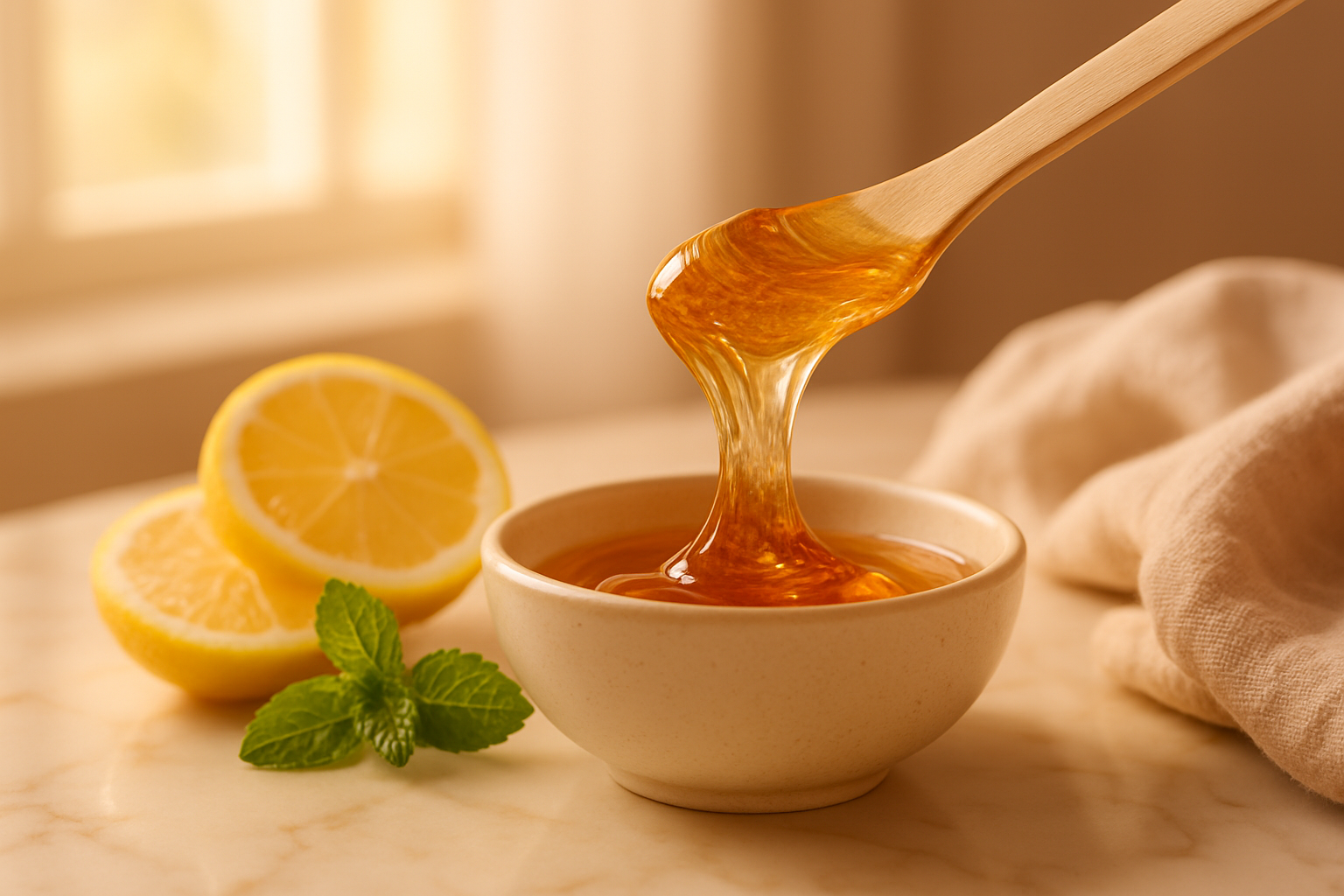
Sugar wax — properly called sugaring — is just three ingredients: sugar, lemon juice and water, cooked into a caramel paste. It's applied at body temperature and flicked off by hand against the direction of hair growth. Our organic sugar waxing uses a formula with zero resin, which is why so many clients with reactive skin switch to it and never go back.
The Gentleness Ranking (With Caveats)
If we're talking purely about trauma to the skin, here's the honest hierarchy from gentlest to harshest:
- Sugar wax — bonds only to hair, not live skin cells
- Fruit wax — lower resin content, nourishing additives
- Traditional hot/strip wax — strongest grip, most lifting
But gentle isn't just about pain in the moment. It's also about:
- Redness that lasts 20 minutes vs 2 days
- Whether you break out in bumps 48 hours later
- Ingrown hairs 2–3 weeks post-wax
- How your skin feels the next time you shower
On all four of those metrics, sugaring consistently wins for sensitive, dry or eczema-prone skin. Fruit wax is a close second and often the better choice if your hair is very fine or you want a quick full-leg session.
Which Wax Suits Which Skin & Area
Sensitive or reactive skin
Go sugar. The paste is lukewarm, so there's no risk of thermal burns (a real issue in rushed salons where wax is overheated). Because it doesn't adhere to live skin, you can go over the same patch twice without damage — useful for stubborn underarm hair.
Dry Lahore winter skin
Fruit wax wins here. The glycerin and fruit-oil content leaves a slight moisture film, which helps if your shins and forearms get flaky between October and February.
Coarse, dense hair (bikini, underarms)
Traditional hard wax (not strip wax — hard wax that shrink-wraps the hair) is actually the most efficient for very coarse hair, because it grips strong strands cleanly. But sugar paste works beautifully too if your stylist is experienced; it just needs more passes.
Facial waxing
Neither traditional strip wax nor hot sugaring is my first choice for the face. For upper lip, chin and sideburn fuzz, we usually recommend threading with fruit wax or classic threading with thread, because facial skin is thinner and more prone to pigmentation from repeated pulling.
Legs and arms (large areas)
Fruit wax is the practical pick — faster to apply over big surfaces, cushioned enough to be comfortable, and the finish is smooth and slightly conditioned.
Pain, Ingrowns and Lahore's Climate
Let's talk about the things no one warns you about.
Pain: Sugar wax hurts less in part because of direction. It's pulled with the hair growth, not against it, so follicles aren't yanked sideways. Fruit wax and traditional wax both pull against growth, which is why they sting more — but the sting is also quicker.
Ingrowns: This is where Lahore's humidity becomes relevant. Sweat and friction (think gym leggings, shalwar fabric in summer) push broken hair back into the follicle. Sugaring removes hair at a cleaner angle, which statistically produces fewer ingrowns over a 3–6 month period. If you've battled bumps on your bikini line for years, switching to sugaring for even three cycles usually makes a visible difference.
Pigmentation: Pakistani and South Asian skin is prone to post-inflammatory hyperpigmentation. Hot wax that's too hot leaves faint brown shadows on repeat-wax zones (underarms, bikini). Sugar wax, applied at body temperature, essentially removes this risk.
What to Do Before and After Any Wax
Regardless of which wax you choose, your pre- and post-care decides whether you walk out glowing or itchy.
24–48 hours before:
- Exfoliate gently (a soft washcloth is enough, no acid scrubs)
- Skip retinol, AHAs, and strong actives on the area
- Make sure hair is at least 5–7mm long — too short and nothing grips
Day of:
- Don't apply lotion, oil or deodorant to the area
- Avoid caffeine 1 hour before if you're pain-sensitive (it heightens nerve response)
24–48 hours after:
- No gym, no sauna, no hot showers
- No sun exposure on freshly waxed skin
- Switch to a fragrance-free moisturiser for two days
- Start light exfoliation on day 3 to prevent ingrowns
If you've waxed somewhere delicate and want to extend the smoothness while nourishing the skin, pairing your wax with a body polishing session two weeks later works beautifully — it clears dead skin without irritating freshly waxed follicles.
So, Which Should You Book?
If this is your first time with us or you're coming off years of bad reactions, start with organic sugar wax. If you have a wedding event in 72 hours and need large areas done efficiently with a soft, nourished finish, fruit wax is the move. Traditional wax still has its place for very coarse, dense hair in experienced hands — but in a well-run salon, you honestly won't miss it.
More than the wax itself, the skill of the person holding the spatula is what decides your experience. A rushed hand with the gentlest sugar paste can still bruise you; a patient technician with warm wax can leave you smooth and calm. That's the standard we hold ourselves to in DHA Phase 3, and it's the honest reason our regulars rarely switch methods once they find their fit.