· 5 min read
Threading vs Waxing for Face: Pros & Cons by Skin Type
Should you thread or wax your face? A senior stylist's honest breakdown by skin type — including what actually works for sensitive, oily and mature skin in Lahore.
If you've ever sat in a salon chair debating whether to thread your upper lip or just get it waxed with the rest of your face, you're not alone. It's one of the most common questions we get at Rabbiz Salon in DHA Phase 3 — and the honest answer isn't one is better than the other. It's which one suits your skin, your hair type, and how quickly you want to be out of the chair.
Both techniques have been refined for decades, and both have a real place in a good grooming routine. But the wrong choice on the wrong skin can leave you with redness that lingers for days, breakouts along your jawline, or ingrown hairs on your chin. Here's how a senior stylist actually thinks about it.
The Quick Difference: What Each Method Really Does
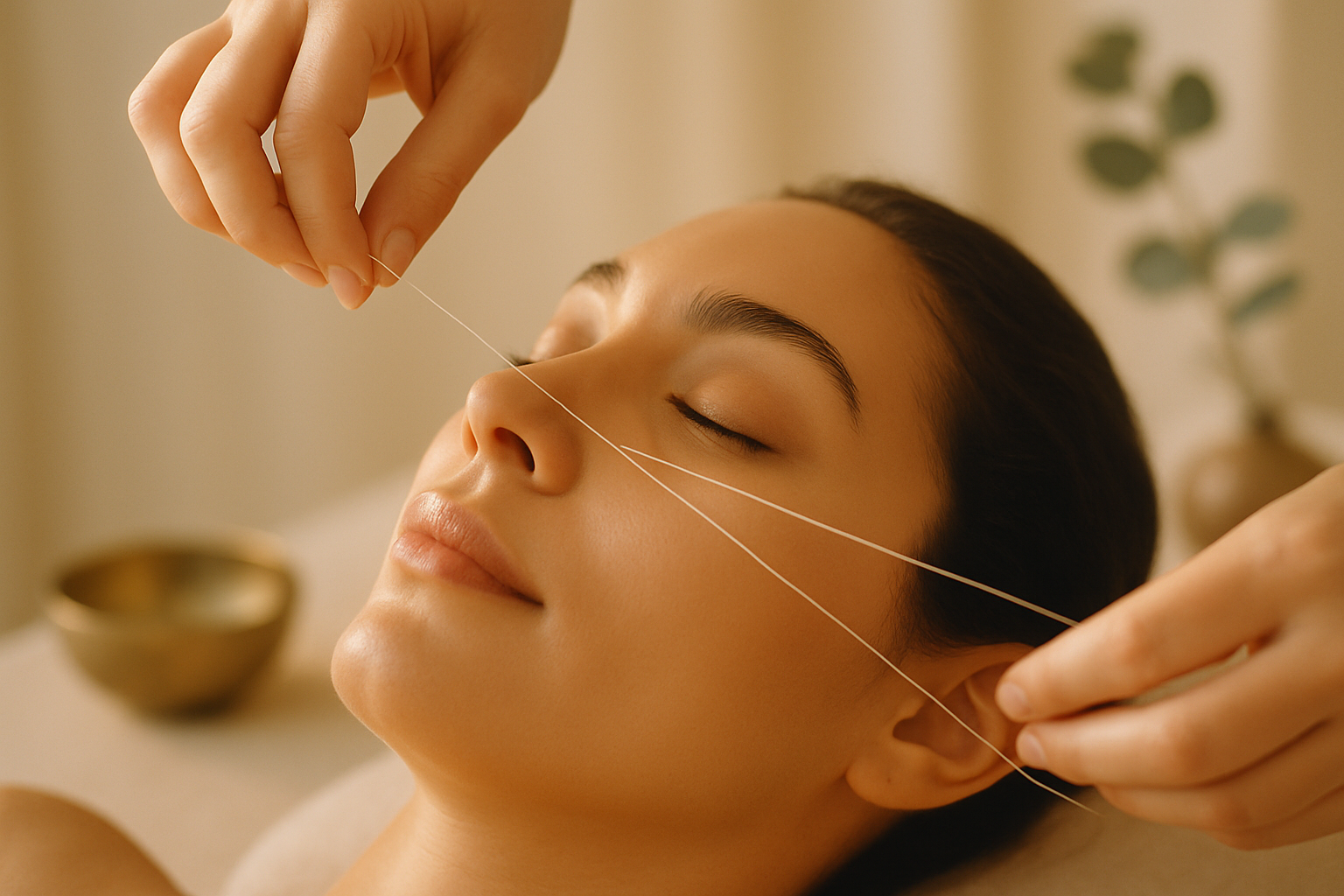
Threading uses a twisted cotton thread to catch and lift hair out from the follicle. Nothing touches your skin except the thread itself — no heat, no product, no adhesive. It's precise enough to shape a single brow hair.
Waxing applies a warm (or cool, in the case of fruit and sugar wax) sticky layer to the skin, which grips the hair and is pulled off in one motion. It clears larger areas quickly — cheeks, sides, jawline, full face — in a fraction of the time threading would take.
So threading is a scalpel. Waxing is a broad brush. Both remove hair from the root, so regrowth timelines are similar — roughly 2 to 4 weeks depending on your cycle.
Pros and Cons at a Glance
Threading — Pros
- Extremely precise; unmatched for brows, upper lip and chin
- No product touches the skin, so far fewer breakouts
- Safe over active acne (a skilled therapist will work around it)
- Great for very fine or vellus hair that wax sometimes misses
- Doesn't lift the top layer of skin, so no interaction with retinoids or actives
Threading — Cons
- Slower for large areas like full cheeks or sideburns
- Can feel sharper in the moment, especially on the upper lip
- Quality depends heavily on the therapist's hand — inconsistent threading tugs skin
Waxing — Pros
- Fast — full face done in under 15 minutes
- Leaves skin feeling smoother because it also removes dead surface cells
- Often better for coarse, dense hair
- Fruit and sugar wax formulas are gentler than traditional wax
Waxing — Cons
- Heat and adhesion can inflame sensitive or reactive skin
- Not safe if you're using retinol, tretinoin, AHAs or recently had a chemical peel
- Higher risk of lifting skin if applied over broken or over-exfoliated areas
- Can trigger post-inflammatory pigmentation on deeper skin tones if done carelessly
By Skin Type: What We'd Actually Recommend
Sensitive or Reactive Skin
Go with threading. Full stop. If your skin flushes easily, reacts to fragrance, or you have rosacea-like redness, the friction and heat of wax will almost always cause a flare. Threading with thread is the cleanest option here — no product, minimal residual redness, and by the time you're home the pinkness has usually settled.
If you're set on wax for larger areas, threading with fruit wax is the middle ground — the fruit wax formulation is cooler and less aggressive than traditional strip wax.
Oily & Acne-Prone Skin
Threading wins again, but for a different reason. Wax residue, even when properly removed, can sit in pores and mix with the sebum you already produce in Lahore's humidity. That combination is a very reliable recipe for congestion along the jaw and chin two days later. Threading avoids the product entirely.
One caveat: if you're mid-breakout, tell your therapist. A good one will simply work around active spots rather than dragging thread across them.
Dry or Mature Skin
This is where wax genuinely shines — if the formula is right. The gentle exfoliation from a fruit or sugar wax leaves dry skin looking brighter and helps skincare absorb better afterwards. Our waxing with organic sugar is particularly good for mature skin because sugar paste is water-soluble, doesn't stick to living skin cells (only the hair), and is far less traumatic than resin-based wax.
Avoid wax if you're on prescription retinoids or if your skin has felt thin or papery lately — thread the priority areas instead.
Normal / Combination Skin
You have the luxury of mixing methods, which is honestly what most of our regulars do. Thread the brows and upper lip (precision matters here), wax the sides of the face, cheeks and jawline for speed and smoothness. A good facial a week later locks in the glow.
Deeper Skin Tones
Pigmentation is the real concern, not the hair removal itself. Any inflammation — from wax that's too hot, thread pulled at the wrong angle, or skin not held taut properly — can leave a shadow that takes weeks to fade. This is where technician skill matters more than method. Ask specifically about their experience with South Asian skin before booking anywhere new.
Aftercare That Actually Makes a Difference
Whichever method you choose, the 24 hours after matter:
- No makeup for at least 4–6 hours on the treated area. Freshly opened follicles + foundation = bumps.
- Skip actives that night — no retinol, no vitamin C serum, no exfoliating acids.
- Cool, not cold, water when you cleanse. A calming gel like aloe or a light ceramide moisturiser is ideal.
- No steam, sauna, gym or direct sun for a day. This is the single biggest cause of post-treatment pigmentation.
- Don't touch. We know. But your hands transfer bacteria straight into open follicles.
If you're prone to ingrowns, a gentle chemical exfoliant two nights later (salicylic or mandelic acid) keeps hair growing straight out instead of curling under.
When to Book What
- Everyday maintenance: threading, every 2–3 weeks
- Before an event or shoot: wax 2–3 days ahead (never day-of — you want redness fully settled)
- Bridal prep: we build a schedule 4–6 weeks out; ask about it when you book your bridal consultation
- First time ever: start with threading on a small area to see how your skin responds
The best facial hair routine isn't loyalty to one method — it's knowing your skin well enough to pick the right tool for the day. And if you're not sure, that's genuinely what we're here for. Come in, let us look at your skin properly, and we'll build something that works for your face.