· 5 min read
Balayage on Dark Pakistani Hair: What to Really Expect
Balayage looks stunning on dark Pakistani hair — but only when the colourist understands warm undertones, melanin, and how our hair lifts. Here's an honest guide.
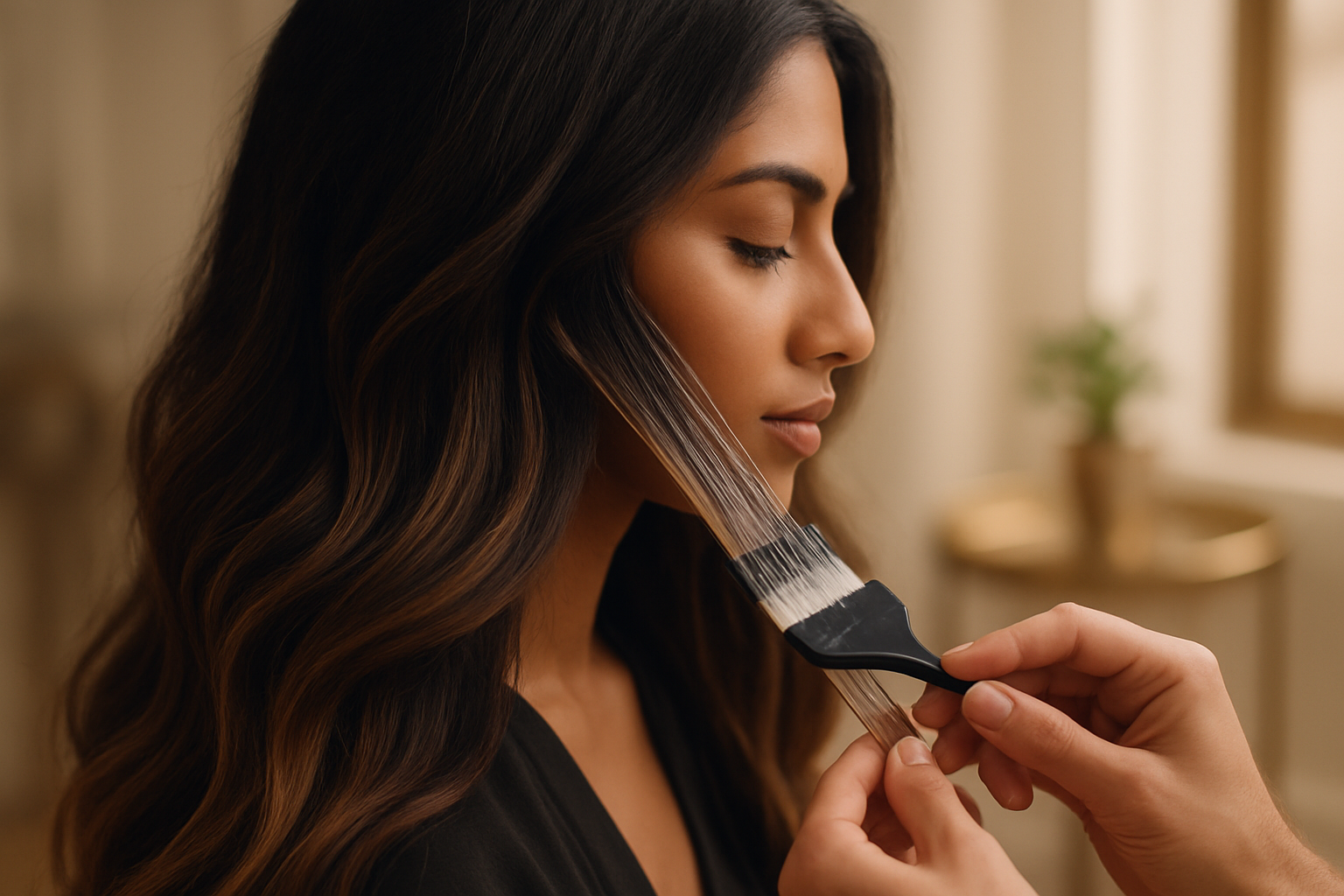
Balayage is one of the most requested colour services at the salon — and also the most misunderstood. On Pinterest it's all buttery blondes and sun-kissed Californian waves, but Pakistani hair is a very different canvas. Our strands are richly pigmented, often coarser, and loaded with warm underlying tones. That doesn't mean balayage won't work — it absolutely does, and it can look spectacular — but you need to walk in with the right expectations so you leave genuinely happy, not disappointed by a photo filter you can't recreate.
Here's what balayage actually looks like on dark Pakistani hair, how many sessions it takes, and what to budget for in terms of upkeep.
What Balayage Actually Is (And Isn't)
Balayage is a technique, not a colour. The word is French for "to sweep," and that's exactly what the colourist does — hand-paints lightener onto the surface of selected strands so the lift fades softly from mid-lengths to ends. There are no hard foil lines, no stripey regrowth, and the grow-out is gentle.
What balayage is not:
- A one-session transformation from jet black to honey blonde.
- The same as highlights (which are saturated root-to-tip inside foils).
- A commitment-free colour — it's lower maintenance than global colour, but it is not no maintenance.
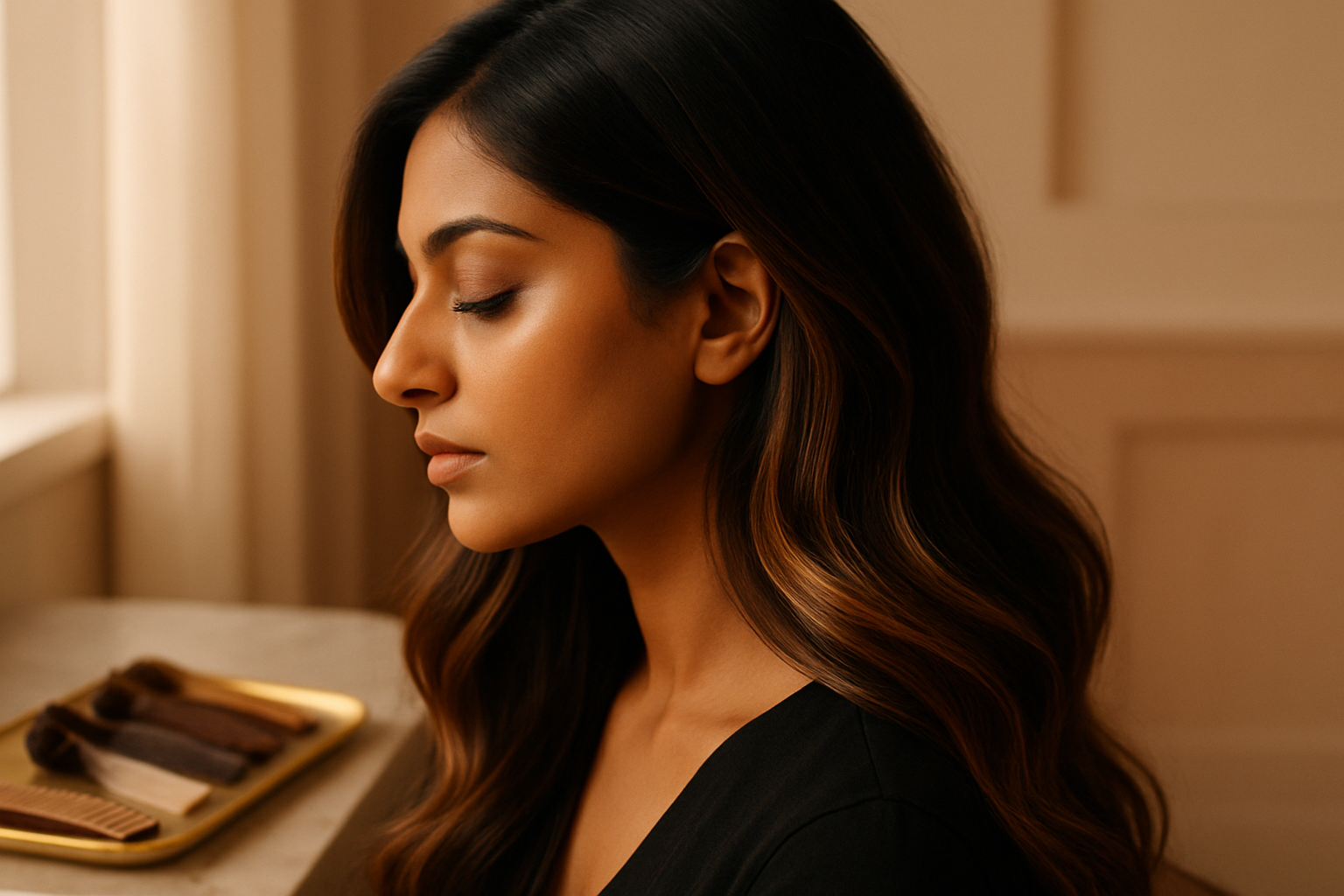
On virgin dark Pakistani hair, balayage usually reads as a soft, dimensional warmth around the face and through the lengths — think caramel, toffee, warm bronze or a deep honey, rather than ashy beige.
How Dark Hair Actually Lifts
This is the part most clients aren't told honestly. Pakistani hair sits around a natural Level 2 to Level 4 — very dark brown to near-black. Underneath that cool-looking surface is a lot of red and orange pigment. When lightener is applied, the hair passes through predictable stages:
- Dark brown → red
- Red → red-orange
- Red-orange → orange
- Orange → yellow-orange
- Yellow-orange → pale yellow
Most dark Pakistani hair, in a single session, will lift to a warm orange or yellow-orange — which, when toned properly, becomes a beautiful caramel, bronze or honey. Pushing it further in one go risks damage, breakage and that dreaded crunchy, cotton-candy texture.
If your goal is a cooler, lighter blonde balayage, plan for two to three sessions spaced 6–8 weeks apart, with proper hair treatments in between to keep integrity intact.
Shades That Genuinely Flatter Us
Some balayage palettes just sing against warm, olive and golden Pakistani skin tones. These are the ones we reach for most often at the salon:
- Caramel balayage — warm, buttery, universally flattering. Beautiful on Level 3–4 bases.
- Toffee and chocolate — subtle dimension for clients who want "my hair but better."
- Warm bronze — the sweet spot between brown and blonde; photographs stunningly.
- Copper-tinged — on-trend, rich, and works brilliantly with brown eyes.
- Deep honey — needs more lift, but gorgeous for an elevated bridal look.
Shades to be cautious with: icy platinum, ash blonde, silver. They can be done, but require significant lifting, a skilled toner, and ongoing purple shampoo discipline. On most Pakistani hair they also grow out awkwardly against a dark base.
What a Balayage Appointment Really Involves
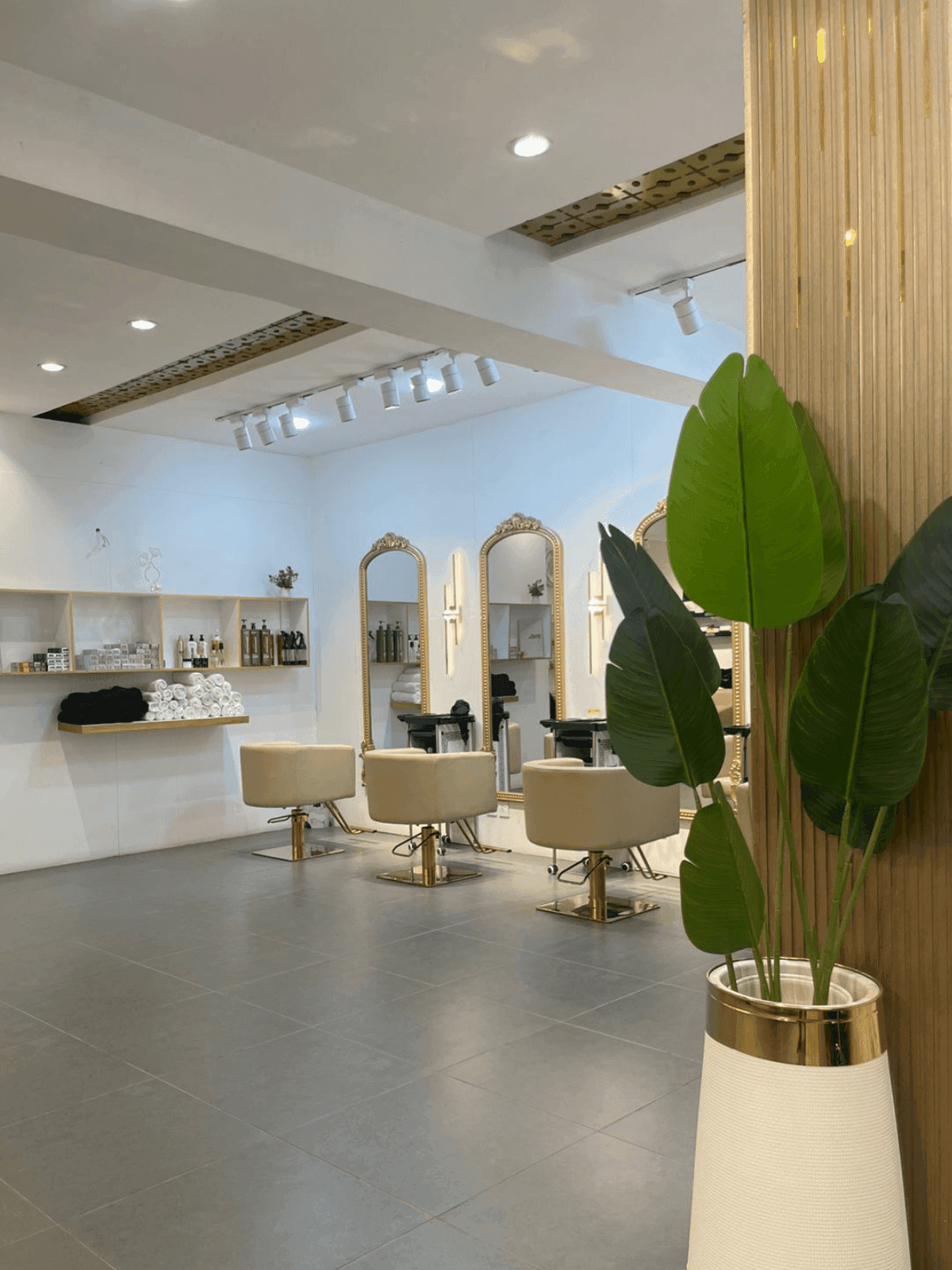
If you've only had box dye or basic highlights before, a proper balayage session is a different experience. At Rabbiz Salon in DHA Phase 3, a first-time balayage typically runs 3 to 5 hours, depending on hair length and density.
Here's roughly what happens:
Consultation (15–20 minutes)
We look at your natural level, check for previous colour or henna (crucial — henna and lightener do not play nicely), discuss the shade you want, and set honest expectations about how many sessions you'll need.
Painting (60–120 minutes)
Strands are hand-painted with lightener. For denser or coarser Pakistani hair, we often use a foilyage technique — balayage painting sealed in foils — because our hair generally needs a little extra heat and processing time to lift evenly.
Processing and rinse
Lightener is monitored closely. This is where experience matters most; over-processing is where damage lives.
Toning
The single most important step for dark hair. A good toner neutralises orange and brass, pulling your lifted strands into that creamy caramel or cool bronze you actually wanted.
Bond treatment and blow-dry
A proper strengthening treatment is non-negotiable after lifting. Leave the salon with a smooth blow-out so you can see the finished dimension in motion.
Upkeep: The Part No One Warns You About
Balayage is lower maintenance than global colour — but "low maintenance" in Lahore's hard water, sun and pollution means something specific:
- Toning gloss every 8–10 weeks. Brass creeps back; a gloss refreshes the tone without re-lifting.
- Sulphate-free shampoo, always. Sulphates strip toner within weeks.
- Purple or blue shampoo once a week if you've gone cooler.
- Weekly deep conditioning — your ends have been lightened and they will drink moisture.
- Heat protectant, every single time you use a dryer or iron.
- UV protection spray if you're outdoors a lot — Lahore sun oxidises lightened hair fast.
Most clients return for a full balayage touch-up every 5 to 7 months, with a gloss or toner in between. If your ends feel fragile, a bonded hair treatment session every 4–6 weeks will keep them smooth and strong.
When Balayage Isn't the Right Choice
I'd rather talk a client out of a service than send her home unhappy. Balayage may not be ideal if:
- Your hair has fresh henna — lightener can react unpredictably and turn green or khaki.
- You've recently done keratin or rebonding — wait at least 2–3 weeks and discuss order of services.
- Your hair is already very damaged — repair first, colour second.
- You want zero upkeep — consider a soft face-framing money piece instead, or try clip-in hair extensions in a lighter tone for commitment-free dimension.
Done right — with honest consultation, proper lift, careful toning and a maintenance plan — balayage on dark Pakistani hair is genuinely one of the most beautiful colour services you can invest in. It moves with your hair, grows out gracefully, and gives you that expensive, lit-from-within look that no box dye will ever replicate.
If you're considering it, book a consultation first. Walking in with clear expectations is the single biggest predictor of walking out in love with your hair.