· 5 min read
Choosing the Right Hair Color for Pakistani Skin Tones
A senior stylist's guide to picking hair colors that flatter wheatish, olive, golden and deep Pakistani skin tones — without washing you out or looking brassy.
Walk into any color consultation and the first question we ask isn't what color do you want? — it's what does your skin actually look like in daylight? Hair color only works when it's in conversation with your complexion. The wrong shade can make healthy skin look tired, pull out redness, or turn brassy within three washes. The right one quietly lifts your whole face. For Pakistani women — whose skin runs from fair porcelain to deep umber, often with surprising undertones — the standard Pinterest colour chart just doesn't cut it. Here's how we think about it at the salon, and how you can think about it before your next appointment.
Start With Undertone, Not Skin Shade
Most women describe themselves as fair, wheatish or dusky — but that's surface colour. What actually determines whether a hair shade flatters you is your undertone, which stays the same even if you tan.
Here's a quick check in natural daylight (not under yellow bulbs):
- Warm undertone: veins on your wrist look greenish, gold jewellery suits you better than silver, your skin has a yellow, peach or golden cast.
- Cool undertone: veins look blue or purple, silver flatters you more than gold, your skin has a pink, red or bluish cast.
- Neutral undertone: veins look blue-green, both metals suit you, your skin reads as a mix.
A huge portion of Pakistani skin — especially in Punjab — sits in warm to neutral-warm territory with golden or olive undertones. This is important because it means the ashy, icy, platinum shades flooding Instagram are often working against most of our complexions, not for them.
Matching Hair Color to Common Pakistani Skin Tones
Fair with pink undertone
Think porcelain skin that burns before it tans. Cool browns, soft chestnut, honey-blonde highlights and auburn tones look beautiful here. Avoid orange-based copper — it clashes with the pink in your cheeks.
Fair-to-medium with golden/yellow undertone
The classic gori complexion with warmth. Caramel, toffee, warm chocolate, bronze and honey balayage are made for you. Steer clear of jet-black if you're over 30 — it can look harsh against softening features.
Wheatish with olive undertone
Probably the most common tone we colour at the salon. You have green-gold in your skin, and you suit rich colours: espresso, dark chocolate with subtle warmth, mahogany, cinnamon, and warm chestnut highlights. Ashy blondes make olive skin look grey — a very common mistake.
Wheatish-brown with warm undertone
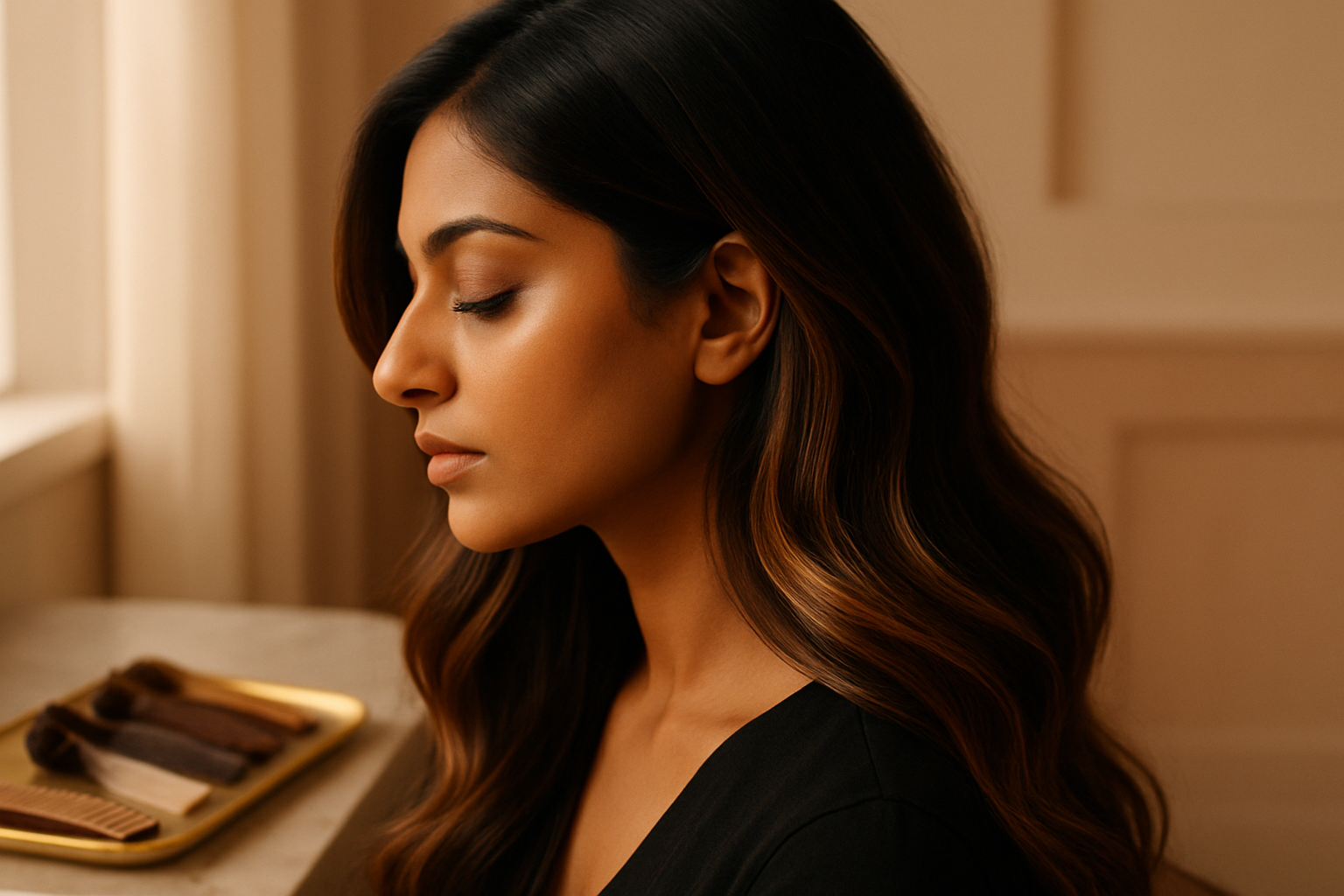
This skin glows with copper, hazelnut, reddish-brown and warm caramel highlights. A soft balayage around the face in a toasted-almond shade will instantly brighten your complexion without the commitment of full colour.
Deep brown with warm or neutral undertone
Deep skin tones carry rich colour beautifully. Think burgundy, deep auburn, warm black-brown, mahogany, and dark cherry undertones. Honey highlights look gorgeous here, as long as they're placed thoughtfully — never bright yellow-blonde all over.
Colors to Approach With Caution
These aren't forbidden — but they need expert placement and the right base.
- Platinum and icy blonde. On most Pakistani hair, achieving this requires aggressive lifting, and the cool tone fights warm undertones. The result is often brassy roots within weeks.
- Jet black box dye. It flattens dimension, is incredibly hard to lift later, and ages most faces by five years. If you want black, ask for a soft black-brown instead.
- Bright red (fire-engine, orange-red). Looks striking in photos but can emphasise redness, pigmentation and under-eye circles. A deeper wine or mahogany is almost always more flattering.
- Cool ash everything. Ash tones can look muddy or grey on warm-undertoned skin. If you love the "clean" look, ask for neutral rather than ash.
Lahore's Climate, Water & How It Affects Your Color
This part gets skipped in most guides. Lahore is hard on hair colour.
- Hard tap water oxidises colour faster, especially reds and coppers, pulling them towards orange.
- UV exposure on your commute lightens the top layer unevenly, so your colour can look patchy within a month.
- Humidity and sweat combined with frequent washing in summer strips tone quickly.
This is why we usually recommend choosing a shade one level deeper than your target, with slightly cooler tonality than you think you want — knowing it will warm up and lighten with Lahore's conditions. We also suggest a toning gloss every 6–8 weeks and a dedicated colour-safe routine. Clients booking in for colour at our DHA Phase 3 studio always leave with a tailored home-care plan, because the salon result is only half the job.
Lifestyle, Maintenance & Being Honest With Yourself
The prettiest colour on the swatch isn't always the right one for your life. Before you commit, ask:
- How often can I realistically visit the salon? Dramatic blondes need toning every 6 weeks. Lived-in brunettes can stretch to 10–12.
- Do I wear a dupatta or hijab regularly? Face-framing highlights give you more pay-off than all-over colour.
- Am I planning a wedding event soon? Avoid dramatic changes less than a month before — give colour time to settle, and book a bridal consultation early.
- Is my hair already chemically treated? Keratin, rebonding and previous dye all affect how new colour takes. Be honest with your colourist.
A good consultation at a proper hair studio should take 15–20 minutes before any colour touches your head. If someone's reaching for the bowl in the first five minutes, that's a red flag.
The Face-Framing Trick Every Woman Should Know
If you're nervous about full colour, here's the single most flattering, low-commitment option we recommend: a soft money-piece or face-framing balayage two shades lighter than your base, placed only around the front sections. It costs less, grows out beautifully, requires almost no maintenance, and immediately brightens your complexion in photos and in person. For most Pakistani skin tones, a warm honey or caramel face-frame on a dark brown base is close to foolproof.
Book a proper consultation, bring reference photos in daylight rather than filtered selfies, and trust a colourist who talks about your skin as much as your hair. That's how you end up with colour that genuinely looks like it belongs on you.