· 5 min read
Dandruff in Lahore: Why It Happens & How to Fix It
Between Lahore's dust, hard water and heavy oiling habits, dandruff is almost inevitable. Here's what actually causes those flakes — and the routine that clears them for good.
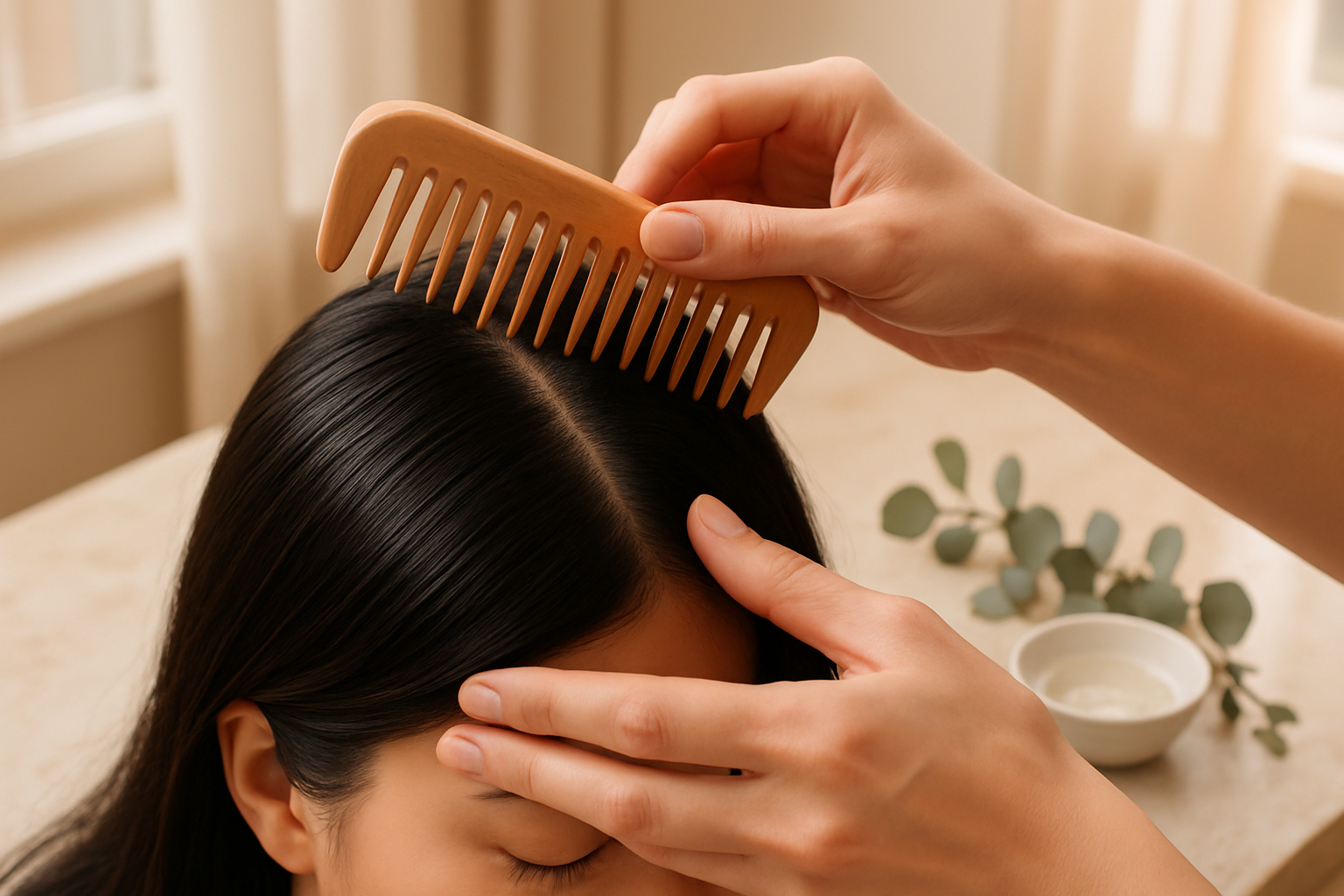
If you have lived through even one Lahore winter or a dusty October afternoon on Y-Block, you already know the drill: black shoulders on your kurta, an itchy scalp by 4 pm, and that quiet embarrassment when someone tucks your hair behind your ear. Dandruff is one of the most common complaints we hear at the salon — and also one of the most misunderstood. It is rarely about "dryness," and almost never fixed by more coconut oil. Here is what is really going on with your scalp in this city, and the routine that actually clears it.
What Dandruff Actually Is (And Isn't)
Most flakes are not dry skin falling off a parched scalp. True dandruff is usually a mild inflammatory reaction to a yeast called Malassezia that lives on everyone's scalp. It feeds on the oils your skin produces. When it overgrows — because of stress, hormones, humidity or product buildup — your scalp responds with faster skin turnover, redness and those familiar white-to-yellow flakes.
That is why:
- Oiling a flaky scalp often makes it worse, not better. You are feeding the yeast.
- Flakes usually look greasy or clumped, not powdery.
- The itch tends to come in waves, especially at night or after sweating.
If your flakes are actually small, dry and dust-like, and your scalp feels tight rather than itchy, that is more likely dry scalp — a different problem with a different fix (more on that below).
Why Lahore Makes Dandruff So Much Worse
Lahore hands your scalp a very specific set of problems. Understanding them is half the battle.
1. Hard water
Most of DHA, Cantt and Gulberg run on borewell water that is high in calcium and magnesium. Hard water leaves a film on the hair and scalp, blocks pores, and stops shampoo from lathering properly. That residue is a perfect food source for Malassezia.
2. Pollution and dust
Smog season (roughly late October to February) coats every strand in fine particulate matter. It settles on the scalp, mixes with sebum, and creates the sticky buildup you can literally scrape off with a nail after two days without washing.
3. Heavy oiling culture
We love a good champi. But leaving mustard, coconut or amla oil on for 24 hours, or oiling twice a week on an already oily scalp, is one of the fastest ways to flare dandruff. Oil is a treatment, not a lifestyle.
4. Infrequent washing
Many women in Lahore still wash only once or twice a week because they were told frequent washing damages hair. For a flake-prone scalp, this is the opposite of what you need.
5. Temperature swings
Going from a 42°C afternoon into an over-air-conditioned office, or from a hot shower into a cold December morning, disrupts the scalp's barrier and triggers flare-ups.
The Anti-Dandruff Routine That Actually Works
Forget the folk remedies for a minute. Here is the sequence we recommend to clients, in order.
1. Wash more often, not less. Three times a week is the minimum for an actively flaking scalp. You are not "stripping" your hair — you are removing the food source.
2. Use a medicated shampoo correctly. Look for one of these actives: ketoconazole 2%, zinc pyrithione, selenium sulfide, or piroctone olamine. The trick most people miss: lather it into the scalp only, leave it for 5 minutes, then rinse. Do this twice a week, and use a gentle sulphate-free shampoo on the other days.
3. Rotate your actives. Yeast adapts. If you use the same anti-dandruff shampoo for a year, it stops working. Switch between two actives every couple of months.
4. Rethink oiling. If you must oil, do it 30–60 minutes before washing — not overnight. A light rosemary or tea tree oil massage is far better for a flaky scalp than heavy coconut or mustard.
5. Rinse with filtered or boiled-and-cooled water for the final rinse. It sounds fussy, but on hard-water areas it makes a visible difference within two weeks.
6. Address buildup once a month. A clarifying wash or an in-salon scalp detox will lift the mineral and product residue that no daily shampoo can touch. Our in-salon hair treatments include a deep scalp cleanse specifically designed for Lahore's water and pollution combination.
When to Book a Salon Scalp Treatment
Home care handles mild-to-moderate cases. Book a professional session if:
- Flakes return within 3 days of every wash
- You see redness, yellow crusting, or scalp acne
- You are losing more hair than usual along with the flakes
- You have tried two different medicated shampoos with no improvement in 6 weeks
A proper salon treatment does three things you cannot do at home: a magnified scalp analysis, a steam-assisted deep cleanse that softens and lifts hardened sebum, and a targeted serum massage that calms inflammation. At Rabbiz Salon in DHA Phase 3, we usually pair a scalp detox with a nourishing mask on the lengths only, so we are not adding oil back to the problem area. Explore our full hair care menu to see which option fits your scalp type.
If your dandruff is tied to a wider hair-fall or breakage issue, a course of restorative hair treatments spaced two to three weeks apart tends to give the most stable results.
Dry Scalp vs Dandruff: Don't Treat the Wrong Problem
This matters, because the routines are almost opposite.
Dry scalp signs
- Small, powdery, white flakes
- Tight feeling after washing
- Worse in December-January air
- Little to no itch, or itch only when very dry
Fix: Fewer washes, a hydrating sulphate-free shampoo, a light scalp serum with hyaluronic acid or panthenol, and yes — a gentle pre-wash oil is fine here.
Dandruff signs
- Larger, yellowish, sometimes greasy flakes
- Persistent itch, especially when you sweat
- Worse in humid months and smog season
- Scalp may look pink or shiny
Fix: More frequent washes, an antifungal shampoo, less oil, monthly clarifying.
Mistaking one for the other is why so many women in Lahore feel stuck in a cycle — pouring oil on an itchy scalp that needs the opposite.
Lifestyle Factors Worth Fixing
A few things quietly make dandruff worse and are worth cleaning up alongside your hair routine:
- Pillowcases: Change them twice a week during a flare. Silk or clean cotton, not the same one for a fortnight.
- Dupattas and caps: Trap sweat and yeast. Rotate them.
- Diet: High sugar and very dairy-heavy weeks tend to trigger flare-ups in a lot of clients. Not medical advice — just a pattern we see.
- Stress: A real trigger, not a cliché. Dandruff almost always flares before weddings and exams.
- Hot tools daily: Heat dries the mid-lengths and confuses people into over-oiling the scalp to compensate.
Give a proper routine six full weeks before you judge it. Scalps are slow to change, but they do change — and once you get yours quiet, keeping it that way is genuinely low-effort.