· 5 min read
Dandruff in Lahore: Why It Happens & How to Actually Fix It
Between Lahore's dust, hard water, and back-to-back weather swings, dandruff is almost inevitable. Here's what's really causing those flakes — and the routine that clears them.
If you've ever worn black to a Lahore wedding and spent the evening quietly brushing your shoulders, you already know how loud dandruff can be. It's one of the most common complaints we hear at the salon, especially in the shoulder seasons when the weather can't decide between summer and winter. The good news: dandruff is almost always fixable. The catch is that most women in Lahore are treating the wrong cause — layering more oil, switching shampoos every two weeks, or scrubbing the scalp raw. Let's break down what's actually happening on your scalp, and what to do instead.
What Dandruff Actually Is (And Isn't)
Dandruff isn't just "dry scalp." In most cases, it's an inflammatory response to a yeast called Malassezia that lives naturally on everyone's skin. When your scalp produces excess oil — or when irritation, sweat and product buildup give the yeast a buffet — it multiplies, and your skin sheds faster than usual. Those large, sometimes yellowish flakes you see? That's the shedding.
True dry-scalp flakes are smaller, whiter, and usually come with tightness, not itch. Knowing which one you have changes everything about how you treat it:
- Oily, itchy, larger flakes = seborrheic dandruff (the common kind)
- Fine, powdery, tight-feeling flakes = dry scalp
- Thick silvery patches with a defined edge = likely not dandruff; see a dermatologist for psoriasis
Why Lahore Makes It Worse
Our city is genuinely hard on scalps. A few very local reasons your flakes keep returning:
1. Hard water. Most of Lahore, including DHA, runs on borewell water that's high in minerals. It leaves a film on the hair shaft and scalp that traps sebum and product residue — perfect conditions for yeast.
2. Pollution and dust. AQI spikes in October–February coat the scalp with fine particulate matter. Combined with sweat under a dupatta or helmet, it clogs follicles and inflames the skin.
3. Extreme weather swings. Summer sweat feeds Malassezia; winter dryness compromises your scalp barrier. Both routes lead to flakes, which is why so many women get dandruff twice a year — around March and again in November.
4. Over-oiling. This is the big one. The old advice of leaving heavy coconut or mustard oil on overnight can massively worsen seborrheic dandruff. Oil is food for yeast. If oiling makes your itch worse within 24 hours, that's your answer.
5. Infrequent washing. Many clients wash only once a week to "protect" colour or keratin. For an oily, flake-prone scalp, that's simply too long.
The At-Home Routine That Actually Clears Flakes
Here's the protocol we recommend to clients before they even come in for a treatment. Give it three to four weeks.
Step 1: Pick the right active shampoo
Look for one of these actives on the label, and rotate if one stops working after a few months:
- Ketoconazole 2% (like Nizoral) — antifungal, use twice a week
- Zinc pyrithione — antibacterial and antifungal, gentler for daily-ish use
- Salicylic acid — for thicker, scaly buildup
- Selenium sulfide — powerful, best for stubborn cases
Step 2: Wash correctly
This matters more than the product. Wet hair thoroughly, apply shampoo only to the scalp, and let it sit for five full minutes before rinsing. Most women rinse in 30 seconds and wonder why nothing works. Follow with a lightweight conditioner on the lengths only — never on the scalp.
Step 3: Rethink oiling
If you love oiling, switch to a pre-wash treatment: apply lightly to the scalp one to two hours before shampoo, then wash out completely. Better options for flake-prone scalps are tea tree, rosemary, or jojoba rather than heavy coconut or mustard.
Step 4: Wash frequency
Aim for every two to three days during a flare-up. Once it calms, you can stretch back to twice a week.
Salon Treatments Worth Booking
At-home shampoos handle 70% of cases. For the rest — or when you're tired of managing it alone — in-salon work makes a visible difference in one or two sessions.
At Rabbiz Salon in DHA Phase 3, our most-requested fix is a medicated scalp detox as part of our hair treatments menu. It combines a clarifying scrub to lift buildup that hard water leaves behind, a targeted antifungal mask, and a cool-steam infusion so the actives actually penetrate rather than sitting on top of oil.
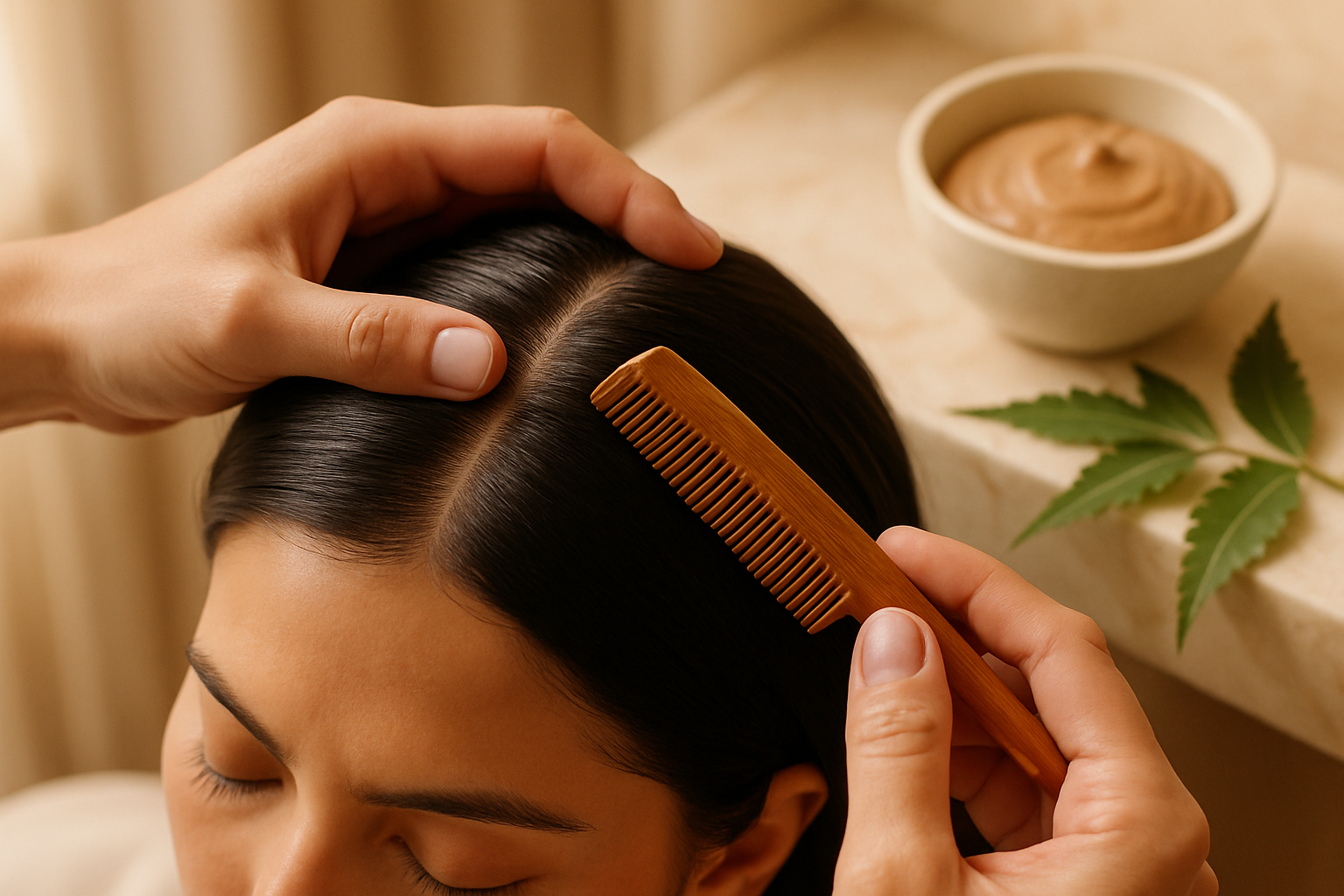
For clients whose dandruff comes with stress-related shedding, we pair the scalp treatment with a relaxing head massage from our hair care menu — increased circulation genuinely helps, and the cortisol drop is a bonus. Brides preparing for events often add this to their pre-wedding calendar so their scalp is clear and calm well before the mehndi.
If you're colouring or doing keratin, ask your stylist to do a clarifying wash and scalp check first. Applying chemical services to an inflamed, flaky scalp is a common reason for burning and post-treatment shedding.
Habits That Quietly Keep Dandruff Coming Back
Even with the right shampoo, these small things sabotage progress:
- Sharing combs, brushes or towels — yeast transfers easily
- Sleeping with wet or damp hair — creates the warm, moist environment yeast loves
- Wearing the same dupatta or cap for days — wash fabric that touches your scalp regularly
- Skipping breakfast and living on chai — B-vitamin and zinc deficiencies show up on the scalp within weeks
- Dry shampoo overuse — great in an emergency, but it layers on the buildup that's already the problem
Also worth naming: stress. Exam season, wedding season, work deadlines — we see visible flare-ups in clients within two weeks of a stressful period. It's real, and it's why treatment has to include rest and scalp massage, not just product.
When to Stop DIY-ing and See a Professional
Book a consultation if you notice any of the following, because these aren't standard dandruff:
- Flakes with redness, oozing or crusting
- Hair falling out in defined patches
- Itch that keeps you awake
- No improvement after four weeks of a proper medicated shampoo routine
- Flakes spreading to your eyebrows, sides of the nose or chest
A good stylist or trichologist can look at your scalp under magnification and tell within minutes whether you're dealing with seborrheic dermatitis, psoriasis, a fungal infection or simple buildup — and that changes the whole treatment plan.
Dandruff is annoying, but it's rarely permanent. Get the diagnosis right, wash more thoughtfully than you're used to, respect Lahore's water and air, and give your scalp a proper professional reset every couple of months. Black kurtas, restored.