· 5 min read
Eyebrow Shapes by Face Shape: A Definitive Guide
Your brows frame everything. Here's how to choose the right eyebrow shape for your face — oval, round, square, heart, long or diamond — without overplucking or chasing trends.
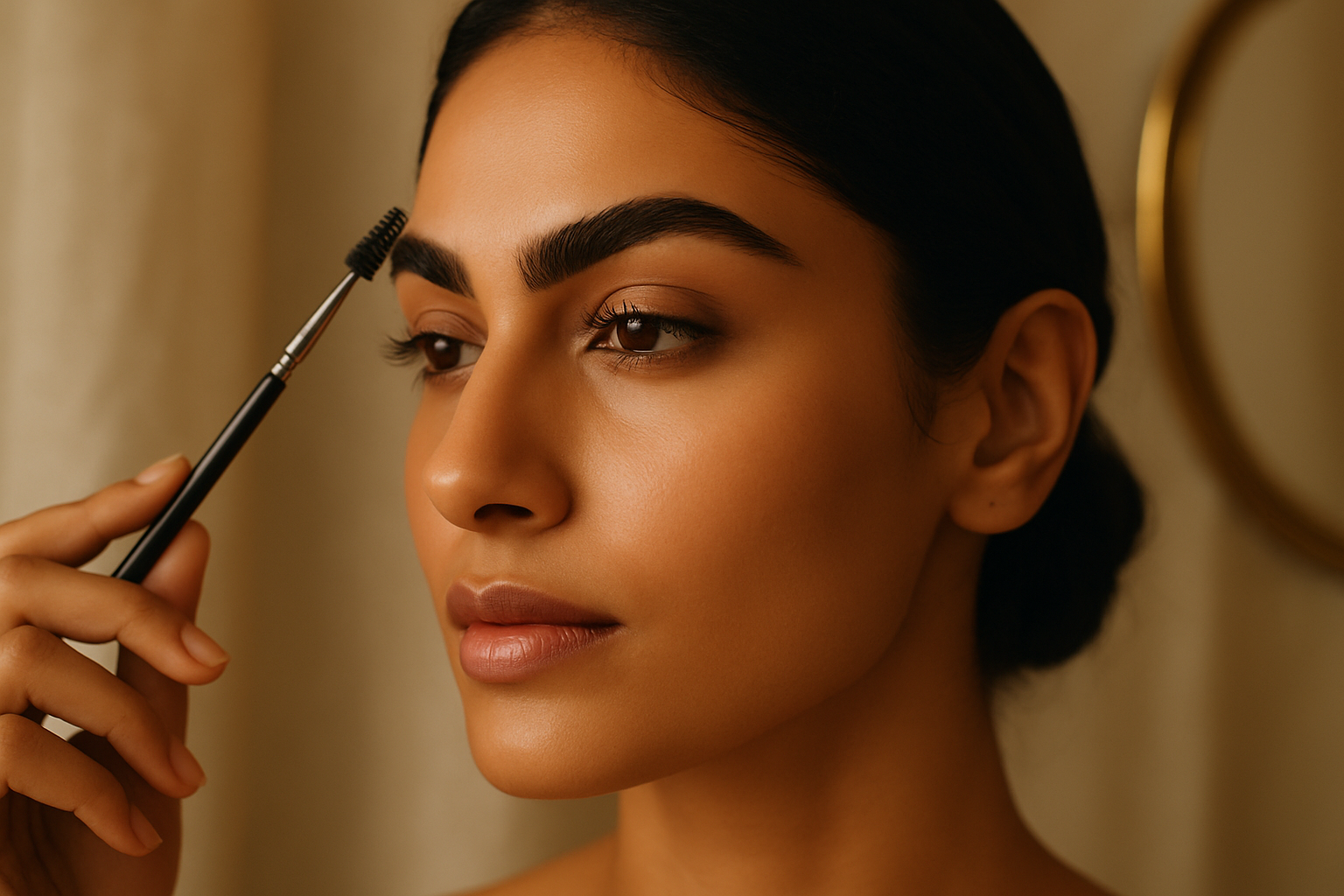
Your eyebrows do more work than any other feature on your face. They balance your jawline, lift your eyes, and quietly tell people whether you look tired, surprised, serene or sharp. And yet most women in Lahore are still walking around with a brow shape that was either copied off a Pinterest board, drawn on by a threading lady in a rush, or — worst case — a casualty of the over-plucked 2008 era that refused to grow back. The truth is, there is no single "perfect brow." There is only the brow that suits your face. This guide walks you through how to identify your face shape and what brow architecture genuinely flatters it — the way a senior artist would map it for you in person.
First, Find Your Face Shape (Properly)
Forget the quizzes. Stand in front of a mirror with your hair tied back and a soft measuring tape, and measure four things:
- Forehead at its widest point
- Cheekbones across the top of the cheek
- Jawline from the tip of one jaw angle to the other
- Face length from hairline to chin
Then compare:
- Oval: Face length is about 1.5x width. Forehead slightly wider than jaw.
- Round: Length and width are similar, soft jawline, full cheeks.
- Square: Forehead, cheeks and jaw are roughly equal width with a strong jaw angle.
- Heart: Wide forehead, defined cheekbones, narrow pointed chin.
- Long (oblong): Length noticeably greater than width, similar widths top to bottom.
- Diamond: Narrow forehead and jaw, widest at the cheekbones.
Once you know what you're working with, brow shape becomes maths, not guesswork.
The Three Points That Decide Everything
Every balanced brow lives on three reference points, regardless of face shape:
- Head of the brow should sit directly above the inner corner of your eye (or the side of your nose bridge).
- Arch should fall roughly two-thirds of the way along the brow — usually above the outer edge of the iris when you look straight ahead.
- Tail should end on a diagonal line drawn from your nostril through the outer corner of your eye.
Face shape doesn't change where these points sit — it changes how thick, how arched, and how angular the brow between them should be. That's the part people get wrong.
Brow Shape Matched to Face Shape
Oval Face — Soft, Slightly Arched Classic
Oval is the face shape every brow style is technically "designed for." Lucky you. Stick to a soft, natural arch with medium thickness. Avoid going too straight (it can lengthen the face) or too dramatically curved (it tips into theatrical). Think balance, not bold.
Round Face — Defined High Arch
Round faces benefit from angles and lift. A higher, more defined arch elongates the face visually and sharpens the cheekbones. Avoid rounded, half-moon brows — they echo the curve of your face and make it look fuller. A clean angular peak with a slightly tapered tail is your best friend.
Square Face — Soft Curved Arch
If your jawline already has strong angles, don't double up with angular brows. A gentle, rounded arch softens the face and balances a strong jaw. Keep the brow medium-thick — too thin makes the lower face look heavier by contrast.
Heart Face — Low, Rounded Arch with a Soft Tail
Heart-shaped faces are wider at the top, so a high dramatic arch only emphasises the forehead. Go for a softer arch placed slightly lower and keep the tail neat but not too long. Medium thickness brings attention back to the centre of the face, balancing a narrow chin.
Long (Oblong) Face — Straight, Flat Brow
This is the one face shape where a flatter, more horizontal brow is actually flattering. Horizontal lines visually cut the length of the face and make it look shorter. Keep them full, keep the arch minimal. Stay away from steep arches that pull the eye upward and lengthen the face further.
Diamond Face — Curved Arch with Length
Diamond faces need brows that widen the forehead area and soften prominent cheekbones. A curved arch with a slightly longer tail does both. Keep the head of the brow a touch fuller than the tail to balance the narrow upper forehead.
Mapping in the Salon vs Doing It at Home
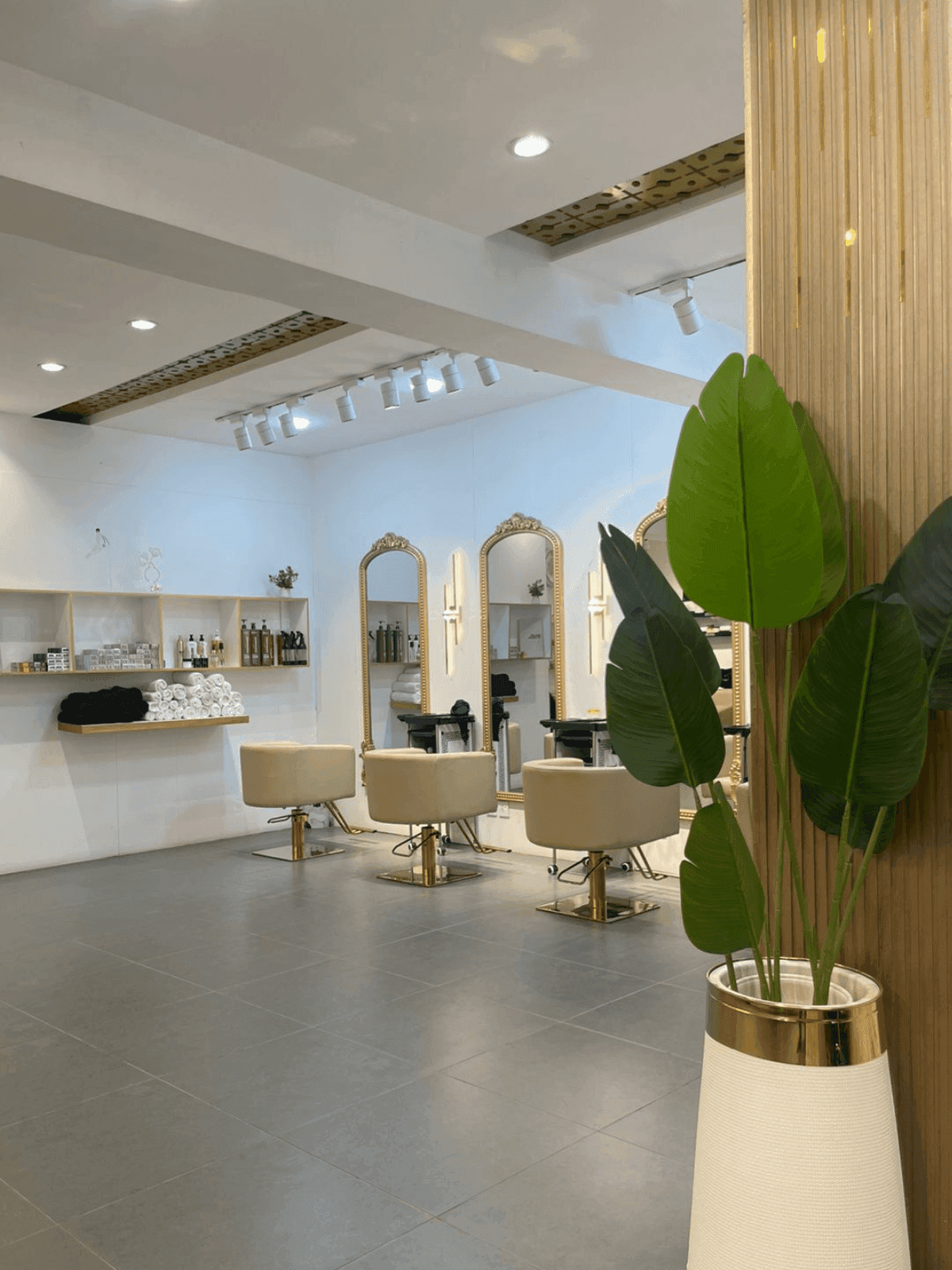
At-home shaping is fine for maintenance — tidying strays between appointments. But the actual shape, the architecture of the brow, is best built by someone trained to read your face proportions and bone structure. At Rabbiz, our brow work starts with mapping using a brow ruler and pencil before any hair is removed, which is what separates a brow shape that holds for weeks from one that grows back patchy.
For women in DHA Phase 3 and the surrounding areas, we typically recommend precision threading for shaping — it gives the cleanest line definition without disturbing the surrounding skin. If your skin is sensitive, breaks out easily, or you've been using retinoids, fruit-wax threading is gentler and still gives a clean finish.
Brow Mistakes That Quietly Age You
A few patterns we see walk into the salon constantly:
- Tails that are too short or that drop downward. A tail that ends below the head of the brow pulls the whole face down and reads as tired. Lift the tail to at least level with the head.
- Over-thinning the front. A thin sparse head makes the face look harsh. The head of the brow should be the fullest part.
- Drawing the arch too far inward. A peak that sits above the inner half of the eye looks permanently surprised. Two-thirds rule, always.
- Matching brows to a trend instead of your face. Feathered brows, soap brows, fluffy brows — all lovely, all useless if they fight your bone structure.
Growing Back Over-Plucked Brows
If years of threading have left sparse patches, stop tweezing entirely for 12–16 weeks. Use a clean spoolie nightly with a drop of castor or rosemary oil, and book a shaping appointment only once there's enough hair to work with. For special occasions in between, brow tinting or a soft pencil fills the gap beautifully. A polished brow finish also pairs naturally with our signature makeup for events, where brow grooming is built into the look.
Maintaining Your Shape Between Appointments
Once you have the right shape, protecting it is mostly about not doing things:
- Don't tweeze above the brow — it's where shape lives.
- Brush brows up daily so you can see actual gaps versus stray hairs.
- Trim only the hairs that stick out past the top line, and only after brushing up.
- Book a clean-up every 3 to 4 weeks — any longer and the shape starts to drift.
Good brows aren't an accident, and they aren't a filter. They're geometry, patience, and someone who knows your face well enough to keep the shape consistent over time. Get that right, and you'll wear less makeup for the rest of your life.