· 5 min read
Hair Extensions in Lahore: Care, Cost & Longevity Guide
Thinking about hair extensions in Lahore? Here's an honest breakdown of the methods, real cost considerations, aftercare and how long each type actually lasts.
Extensions used to be a bridal-only indulgence in Lahore. Not anymore. Between short lockdown haircuts we regretted, hair fall from our summers, and Instagram feeds full of thick, waist-length blowouts, more women are quietly investing in extensions as a regular part of their look. But this is also where the industry gets murky — prices swing wildly, some methods damage the hair underneath, and no one tells you what the upkeep actually involves. Here's the honest, senior-stylist version of everything you should know before you sit in the chair.
The Four Extension Methods You'll Actually Be Offered in Lahore
Most Lahore salons work with four main formats. Each behaves very differently on Pakistani hair, which tends to be medium-to-coarse, often colour-treated, and prone to dryness at the mid-lengths.
Clip-ins
Temporary, you put them in yourself, take them out at night. Best for events, shoots, or when you want fuller hair for a wedding function without any commitment. Zero damage if removed nightly. The downside: they don't give you daily long hair.
Tape-ins
Thin wefts sandwiched to your own hair with medical-grade adhesive strips. They lie flat, look natural, and are the most popular semi-permanent option in DHA right now. Reapplied every 6–8 weeks as your hair grows out.
Micro-ring / i-tip
Small strands attached to your hair with tiny silicone-lined beads. No heat, no glue. Excellent for fine hair that reacts badly to adhesives, but takes longer to fit (3–5 hours) and requires precise removal.
Sew-in wefts (weave)
A cornrow base with wefts stitched in. Gives dramatic thickness and works well for thicker Pakistani hair, but the tension can stress the scalp if done too tight — a very common problem in cheaper salons.
Fusion/keratin-bond extensions exist too, but we don't recommend them for most clients here — the heat bond weakens already dry hair, and Lahore's humidity plus hard water shortens their lifespan considerably.
What Extensions Actually Cost in Lahore (And Why Prices Vary So Much)
A realistic cost conversation has three layers: the hair, the application, and the maintenance. Skip any of these and the quote you're comparing is meaningless.
The hair itself is the biggest variable. Synthetic wefts are cheap but look plasticky in daylight and can't be heat-styled. Non-Remy human hair (cuticles going in different directions) tangles quickly and lasts maybe 3 months of regular wear. Remy human hair — cuticles aligned — is what you actually want, and it's priced accordingly. Double-drawn Remy, where every strand is the same length top to bottom, gives that thick-to-the-tip look and costs more again.
Application fees in Lahore range from modest to significant depending on the method, the length of the fitting, and the stylist's experience. A proper tape-in or micro-ring fitting is a 2–4 hour appointment with colour matching, cutting to blend, and styling — you're paying for the technician's hands as much as the product.
Maintenance is the hidden cost people forget. Tape-ins need to be moved up every 6–8 weeks. Micro-rings every 8–10 weeks. Sew-ins re-done every 6–8 weeks. Factor that in over a year and your real budget is closer to double the initial quote.
If you'd like an honest walk-through of what your hair can carry and what it should cost, our Hair Extensions consultation is free and includes a colour match under natural light — which matters more than most people realise.
Longevity: How Long Each Type Really Lasts
Marketing numbers and real-world numbers are two different things. Here's what we see in the chair:
- Clip-ins (good Remy): 12–18 months with occasional wear, washed only a few times a year.
- Tape-ins: The hair itself lasts 6–12 months and can be re-taped 3–4 times. Cheaper hair rarely makes it past cycle two.
- Micro-rings: 9–12 months of hair life, with 3–4 move-up appointments in that period.
- Sew-in wefts: Hair lasts 12+ months if it's quality Remy; the install lasts 6–8 weeks before it needs redoing.
Lahore-specific factors shorten these numbers: hard water minerals build up and make extensions feel straw-like, our pollution dulls colour faster, and swimming in chlorinated pools (very common in DHA households) is genuinely one of the worst things you can do to any extension.
Aftercare That Actually Protects Your Investment
Extensions don't have a scalp feeding them oil, so they behave like the driest, oldest ends of your natural hair — magnified. Your aftercare has to reflect that.
- Brush from the ends up, twice a day, using a loop brush or a soft boar-bristle. Never yank at the roots.
- Wash 2–3 times a week maximum with a sulphate-free, pH-balanced shampoo. Focus lather at the scalp; let it rinse through the lengths.
- Condition mid-lengths to ends only — never at the bonds, tapes or rings, or they'll slip.
- Use a leave-in and a lightweight oil on the ends daily. Argan and camellia work well on Pakistani hair without weighing extensions down.
- Sleep in a loose braid on a silk or satin pillowcase. This one habit alone doubles the life of your extensions.
- Heat-style with a protectant, always, and keep tools below 180°C. Remy hair can be heat-styled, but it can't repair itself.
- Never sleep with wet extensions. Matting at the bonds is almost always caused by this.
Monthly salon maintenance — a deep conditioning treatment and a gentle wash-and-blow by someone who knows the attachment method — makes a visible difference. Our Hair Treatments & Dye team offers extension-safe masks that don't compromise the bonds.
Colour, Cut and Blending: The Part Most Salons Rush
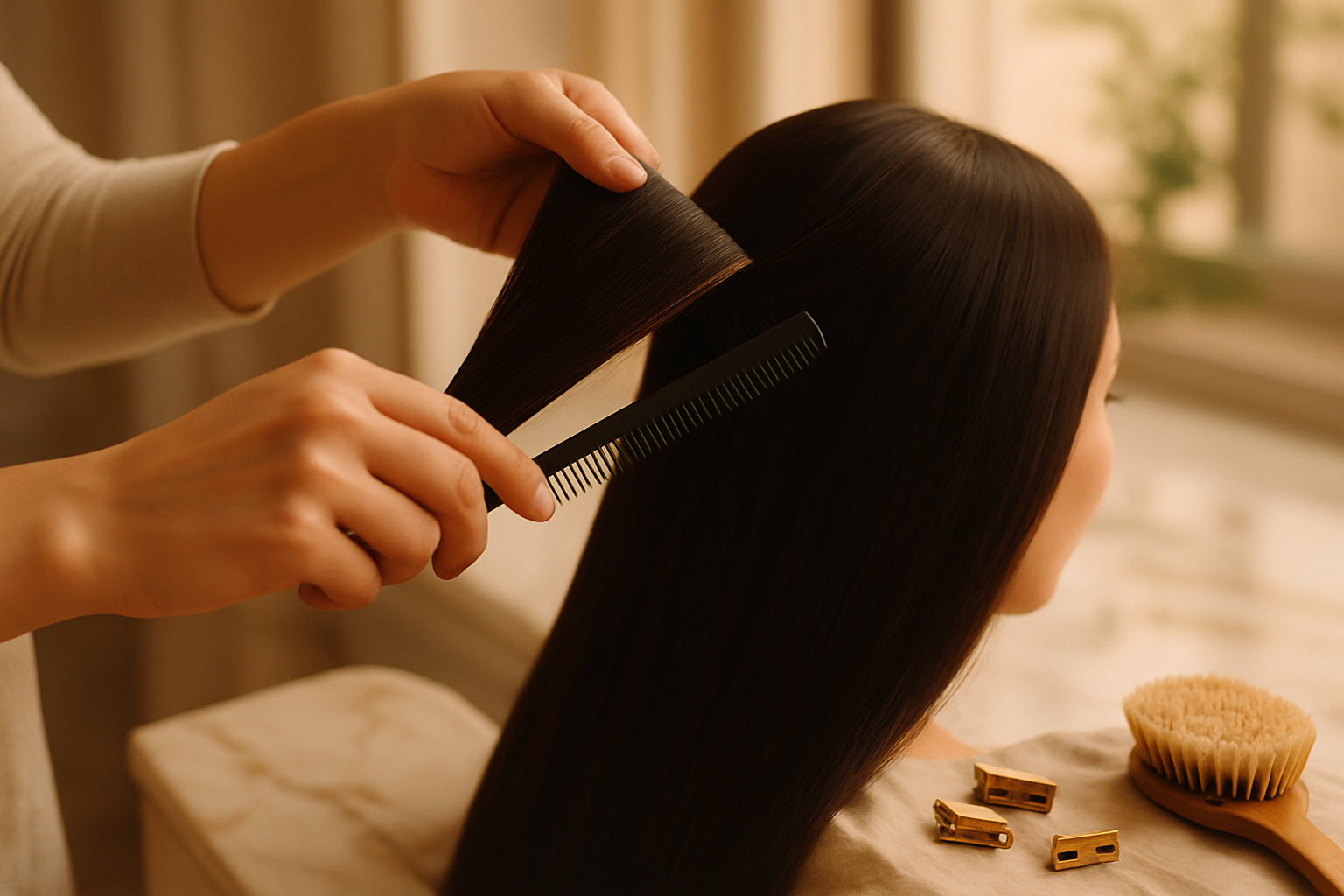
An extension fitting is only half the appointment. The other half is the cut. Extensions come in blunt, uniform lengths — if they're not layered into your natural hair, you'll see a shelf where your hair ends and theirs begins. A good stylist spends 30–45 minutes just on this blend.
Colour matching matters just as much. Pakistani hair is rarely one flat tone — there's usually warmth through the mid-lengths and lift around the face. Extensions should be matched to your ends, not your roots, and often need a subtle gloss to marry the two. If you're planning a fresh colour, do it before the extensions go in so the wefts can be matched to the finished result. A quick chat with our colourists at the Hair desk can save you from an obvious mismatch later.
Who Extensions Are (And Aren't) Right For
Extensions work beautifully on healthy, medium-density hair that's simply not as long or thick as you'd like. They also work well for post-partum thinning around the crown, for growing out a short cut, and for brides who want fuller updos.
They're not the right call if you have active, significant hair fall, a sensitive or inflamed scalp, or very fine hair that can't hold the weight without breaking. In those cases we'll usually recommend addressing the underlying issue first — often with a course of scalp treatments — and revisiting extensions in 8–12 weeks. A quiet, honest "not yet" from your stylist is worth more than a rushed fitting you'll regret.