· 5 min read
Keratin Treatment Myths Debunked for South Asian Hair
Keratin gets blamed for everything from hair fall to baldness in Pakistan. Here's what's actually true for South Asian hair textures — from a Lahore salon perspective.
Walk into any drawing room in Lahore and mention keratin, and you'll get five different opinions in under a minute. One aunty swears it made her hair fall out. A cousin says it's the only reason her hair survived her wedding season. Someone else insists it's just rebonding with a fancier name. The truth, as usual, is more interesting — and a lot more specific to the kind of hair most of us actually have. South Asian hair is typically dense, coarse-to-medium in texture, deeply pigmented, and prone to frizz in Lahore's humidity and dust. That changes how keratin behaves on it, and it's why blanket advice from a YouTube video filmed in California rarely applies to you.
Here's a clear-eyed look at the most stubborn keratin myths we hear at the salon, and what's actually true.
Myth 1: Keratin Is the Same as Rebonding or a Permanent Straightening
This is the single biggest confusion we untangle every week. They are not the same treatment, they don't use the same chemistry, and they don't produce the same result.
- Rebonding / permanent straightening uses strong reducing agents (like ammonium thioglycolate) to break the disulphide bonds inside your hair, then reform them in a straight shape. The change is structural and permanent until new hair grows in.
- Keratin treatments coat and infuse the hair shaft with keratin proteins, sealing the cuticle. They smooth and reduce frizz but do not break internal bonds. The effect washes out gradually over 3–5 months.
If you want pin-straight hair that stays straight even after a shower, that's rebonding. If you want your natural texture to look smoother, shinier and dry frizz-free in 15 minutes instead of 45, that's keratin. Two different goals, two different conversations to have with your stylist during a hair treatments consultation.
Myth 2: Keratin Will Damage South Asian Hair
The damage story usually traces back to one of three things: a badly formulated product, too-high heat during sealing, or a client whose hair was already over-processed (think: bleached, coloured, and previously rebonded).
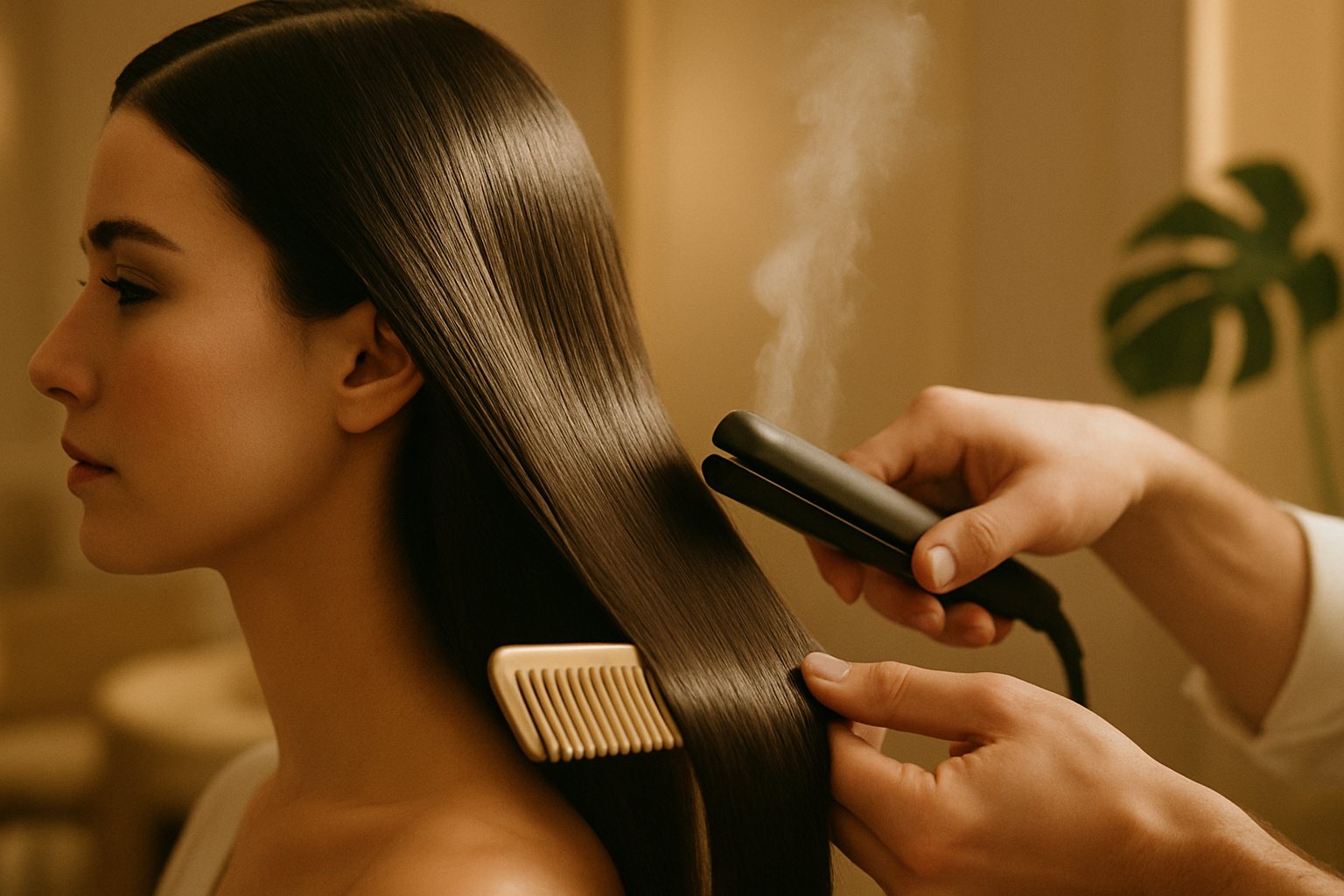
A properly chosen, formaldehyde-controlled keratin treatment applied at the right iron temperature does not damage healthy hair. In fact, for the coarse, dense hair common across Punjab, it often protects hair through Lahore's harshest months by sealing the cuticle against pollution and humidity swings.
The damage risk goes up sharply when:
- The treatment is layered on already-bleached or heavily highlighted hair without strength testing
- Cheap home kits are used with no porosity assessment
- The flat iron is cranked to 230°C on fine or fragile strands
- Aftercare is ignored for the first 72 hours
This is genuinely a treatment where the technician matters more than the brand on the bottle.
Myth 3: Keratin Causes Hair Fall
The correlation people notice is real. The cause-and-effect they assume is usually wrong.
Most women who get keratin done in Pakistan get it before a wedding, a big event, or summer. Those are the same periods loaded with tight hairstyles, heat styling, stress, crash diets, iron deficiency from skipped meals, and seasonal shedding. Hair fall during these windows is overwhelmingly multi-factorial.
Keratin itself doesn't reach the follicle — it works on the hair shaft above the scalp. It cannot make a strand fall from the root. What it can do is make existing breakage more visible, because smoother hair shows fewer broken pieces tangled in the length and more on your brush. If you're already dealing with thinning, address that first with a proper scalp assessment before any chemical service.
Myth 4: Once You Start Keratin, You Can Never Stop
There is no dependency. Your hair doesn't become "addicted." What happens is psychological: once you've lived with smooth, manageable hair for four months, going back to your baseline frizz feels worse than it did before.
When a keratin treatment wears off, your hair returns to its natural texture. It does not come back worse than it was. If anything, the months of reduced heat styling (because you needed less) often leave the hair in better shape than when you started.
You can absolutely do one treatment before the wedding season, enjoy it through winter, and let it grow out naturally. Many of our Lahore clients do exactly this once a year.
Myth 5: All Keratin Treatments Are the Same
This is where being in DHA Phase 3 matters. The keratin category includes everything from gentle protein glosses to industrial Brazilian-style treatments with high formaldehyde derivatives. They are not interchangeable.
At the salon we typically discuss three tiers with clients:
- Express keratin / smoothing gloss — Lighter, lasts 4–8 weeks, great as a first-time introduction or for fine hair.
- Classic keratin — The standard frizz-reduction treatment, lasts 3–4 months, best for medium-density wavy hair.
- Intensive smoothing for coarse, wavy-curly Punjabi hair — Stronger formulation, longer processing, lasts up to 5 months.
Which one suits you depends on your porosity, density, colour history, and how much heat styling you actually do at home. A 10-minute strand assessment during your hair consultation tells us more than any Instagram before-and-after.
Myth 6: You Can't Colour, Tie Up, or Wash Hair After Keratin
The 72-hour rule is real but often exaggerated into a month-long prison sentence. Here's the realistic version:
- First 72 hours: no washing, no tying, no clips, no tucking behind ears, no sweating heavily. This is when the keratin is still bonding to the cuticle.
- After 72 hours: wash with a sulphate-free, sodium-chloride-free shampoo. Loose ponytails are fine. Light clips are fine.
- Colouring: ideally done before keratin in the same appointment, or wait two weeks after. If you want to refresh colour later, book it together with a colour and treatment session so we can sequence it properly.
Chlorinated pools and seawater are the real enemies — they strip the treatment fast. If a beach trip is coming up, time your keratin for after, not before.
How to Decide If Keratin Is Right for You
Ask yourself honestly:
- Do you spend more than 20 minutes blow-drying or straightening your hair most days?
- Does Lahore humidity undo your styling within an hour of stepping outside?
- Is your hair healthy enough (not freshly bleached, not currently shedding heavily) to handle a chemical service?
- Can you commit to sulphate-free aftercare for the next three months?
If you answered yes to three out of four, a properly chosen keratin treatment will probably make your life easier. If not, a deep-conditioning protein mask series might give you 70% of the benefit with none of the commitment — something we'd happily walk you through at the salon before you book anything bigger.