· 5 min read
Mehndi Color: How to Keep Your Henna Deeper, Longer
A Lahore stylist's guide to getting the darkest, longest-lasting mehndi color — from paste prep to the first 48 hours of aftercare.
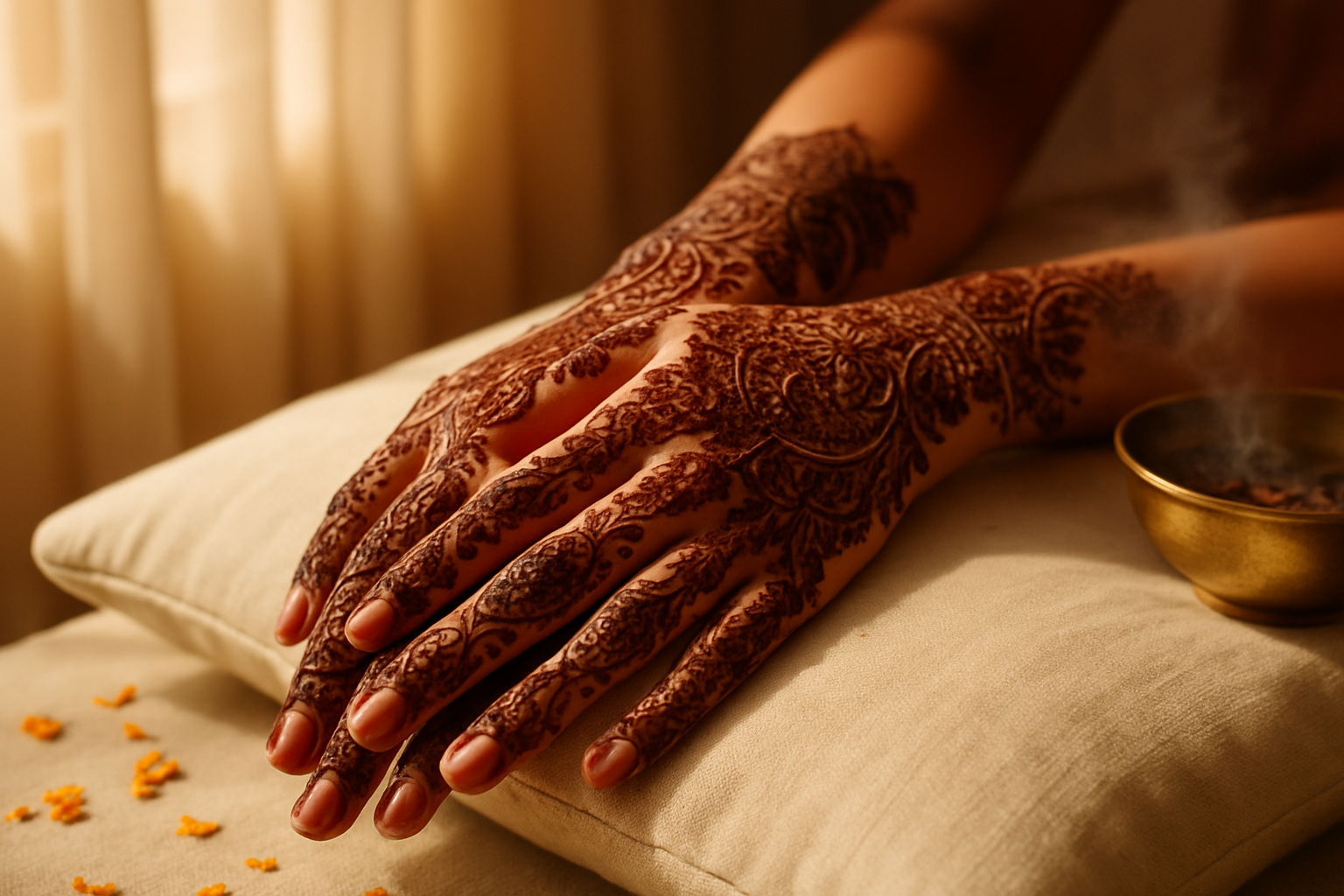
Every bride in Lahore has the same quiet worry the morning after her mehndi event: will the color come out dark enough? A rich, maroon stain feels like a good omen — and honestly, it also photographs beautifully next to a gold-worked outfit. The truth is, mehndi color is less about luck and more about chemistry. The quality of the paste matters, but what you do in the 48 hours around application matters just as much.
After years of prepping brides for their big weeks, we've seen the same small mistakes dull a potentially gorgeous stain. Here's exactly how to get the deepest, longest-lasting mehndi color — whether you're the bride, the sister, or just someone who loves a good Eid stain.
Start With Properly Prepped Skin
Henna binds to the keratin in your skin's outer layer. The cleaner, warmer and more exfoliated that layer is, the deeper the dye molecules can settle. If your hands are coated in lotion, sunscreen or dead skin cells, the stain simply can't penetrate well.
In the 24 hours before application:
- Gently exfoliate your hands, feet and forearms with a sugar scrub — nothing harsh, just enough to lift dead skin.
- Skip moisturiser, serums and sunscreen on the areas that will be hennaed.
- Avoid waxing or threading the exact same day — do it 1–2 days earlier so skin isn't inflamed. If you need waxing with organic sugar or threading, book it ahead of your mehndi event, not the morning of.
- Skip manicures with cuticle oils right before mehndi. If you're getting your nails done, do them a day earlier and ask your technician to keep oils off the fingers.
A quick warm-water hand soak an hour before application also helps — it opens pores and primes the skin to accept the dye.
Choose the Right Paste (and Know What's in It)
Not all mehndi is equal. The deep burgundy stain you see on Pinterest usually comes from a well-rested paste made with pure henna powder, lemon juice, sugar and essential oils like cajeput, eucalyptus or clove. Avoid any cone that smells sharply chemical or stains instantly black — that's often PPD (paraphenylenediamine) and it can seriously irritate skin.
What good mehndi paste looks like
- A smooth, mousse-like consistency that flows cleanly from the cone
- An earthy, slightly herbal smell — not perfumed, not metallic
- A green-brown colour, not jet black
- Stains that start orange and deepen over 24–48 hours
If you're planning bridal events in Lahore, speak to your artist in advance. At the salon, when we coordinate full event looks like bridal prep, we always recommend doing a tiny patch test on the inner wrist two days before the main application — both for allergy safety and to preview the final tone.
The Golden Rule: Leave the Paste On Longer
This is where most people cut their stain short. The dye continues to release into your skin for hours after application. Washing it off at the two-hour mark gives you a pale orange tint that fades in days.
Aim for a minimum of 6–8 hours. Overnight is ideal. Yes, it's annoying. Yes, it's worth it.
To keep the paste on longer without flaking off:
- Once the designs are drawn, let them air-dry for 20–30 minutes until just tacky.
- Dab a cotton ball with a lemon-sugar mix and gently press it over the designs. Do this 2–3 times, spaced an hour apart. The sugar locks the paste; the lemon activates the dye.
- After about 2 hours, wrap your hands loosely in tissue or breathable cotton to protect the paste while you sleep.
- Avoid plastic wrap tight against skin — it causes sweating and can smudge designs.
The First 24 Hours: Heat, No Water
Henna loves warmth and hates water in its early life. Once you scrape off the dried paste (don't wash it off — crumble it off gently with a butter knife or your fingers), the stain will look bright pumpkin orange. Don't panic. It darkens over the next 24–48 hours as it oxidises.
Protect your fresh stain:
- No water contact for at least 12 hours, ideally 24. That means no handwashing with soap, no dishes, no face-washing with those hands.
- Warm your hands over clove steam for 2–3 minutes, twice a day. Place 8–10 cloves on a hot tawa, let them smoke lightly, and hold your hands above (not too close). The warmth deepens the colour dramatically.
- Rub a tiny amount of balm, Vicks or mustard oil on the designs before bed on night one. The heat they generate intensifies oxidation.
- Keep hands away from AC vents and cold water taps.
Extend the Life of Your Stain for 2–3 Weeks
Once your color has fully developed, your focus shifts from deepening to preserving. Mehndi fades fastest where skin exfoliates most — fingertips, palms, between fingers.
Daily habits that keep henna rich
- Moisturise generously. Hydrated skin cells shed slower, so your designs stay sharp.
- Wear rubber gloves for dishwashing, laundry and bathroom cleaning. Detergents are the #1 killer of mehndi.
- Skip chlorine pools and long hot baths for the first week.
- Avoid chemical exfoliants (AHAs, scrubs, bleach creams) on hennaed areas. If you've booked a facial or bleach around your event, keep products off the hands.
- Apply a thin layer of balm or coconut oil before you shower — it creates a barrier against soap.
If you're coming in for post-event pampering like a medi-pedi or body massage, mention your fresh mehndi so your therapist can avoid scrubbing or oiling those specific areas aggressively.
When to Book Mehndi in Your Wedding Timeline
For Lahore brides, timing is everything. Apply mehndi too early and it fades before the Barat photos; too late and it hasn't deepened yet.
- Mehndi event: 2 nights before Barat is the sweet spot. The stain peaks at 48 hours, which lands perfectly on the main day.
- Bridal trials and heavy services: finish keratin, hair color and hair treatments at least 3–4 days before mehndi so you're not scrubbing products off your hands near application.
- Nails: do them the morning of or day before mehndi, not after. Acetone will lift your stain.
A little planning, the right paste, and some patience with the aftercare — that's genuinely the whole secret. Your mehndi doesn't need magic to turn maroon. It needs warmth, time, and the discipline to keep your hands out of the sink for one night.