· 5 min read
Threading vs Waxing for Face: Pros and Cons by Skin Type
Threading and facial waxing both remove hair beautifully, but the wrong pick for your skin type can leave you red, bumpy or breaking out. Here's how to choose.
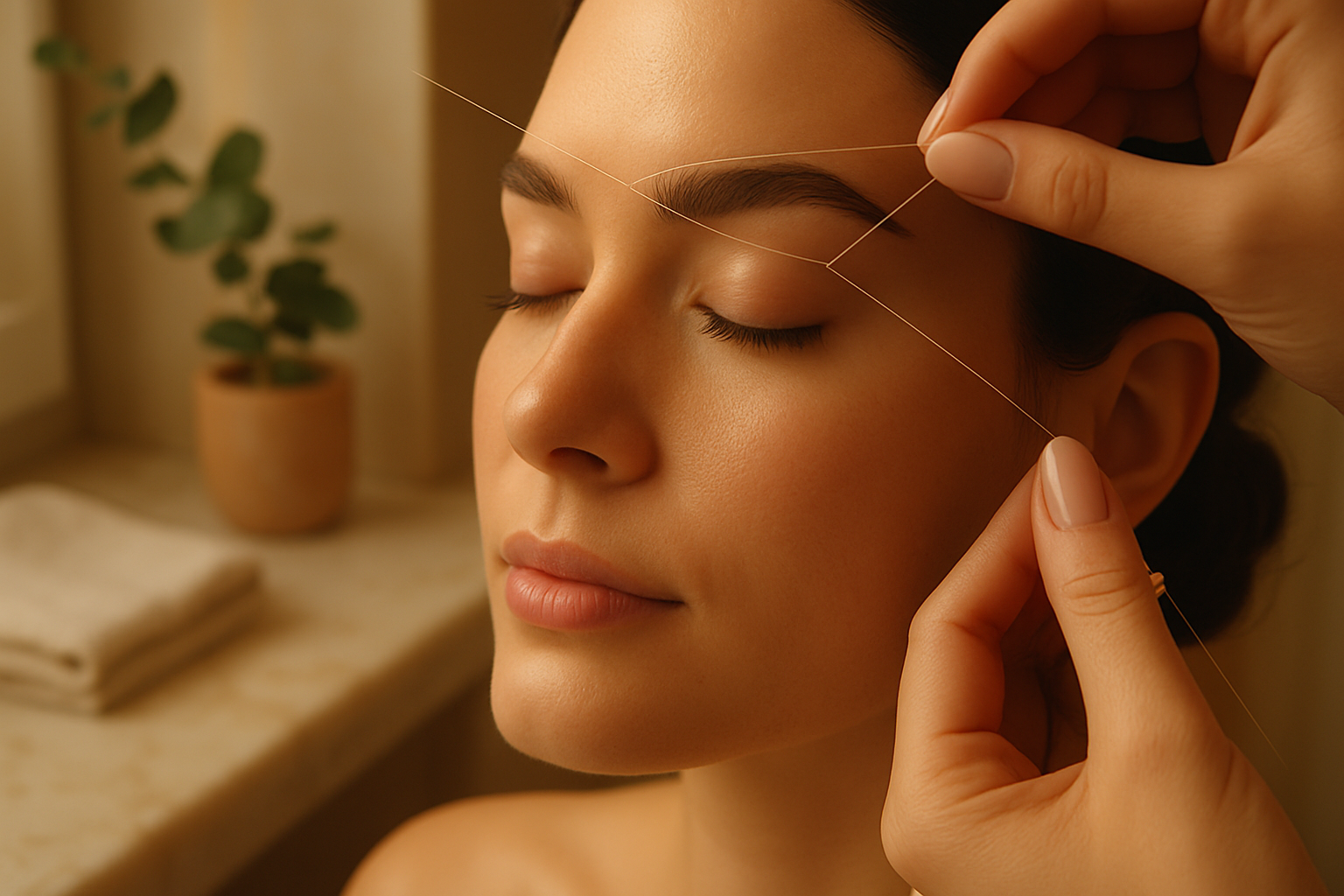
Facial hair removal sounds simple until you sit in the chair and realise the wrong choice is going to show up on your face for the next four days. Redness that won't fade before a dinner. A tiny breakout along the jaw. That patchy, over-plucked look above the lip. At Rabbiz Salon in DHA Phase 3, we see clients switch between threading and waxing constantly, often for the wrong reasons — usually whichever their last salon pushed. The truth is, both are excellent techniques. The right one depends almost entirely on your skin type, the area you're treating, and what your skin is doing that week.
Here is the honest, stylist's-eye comparison — no marketing spin.
How Threading and Facial Waxing Actually Work
They seem similar because they both remove hair from the root, but the mechanics are very different — and that difference is what causes reactions.
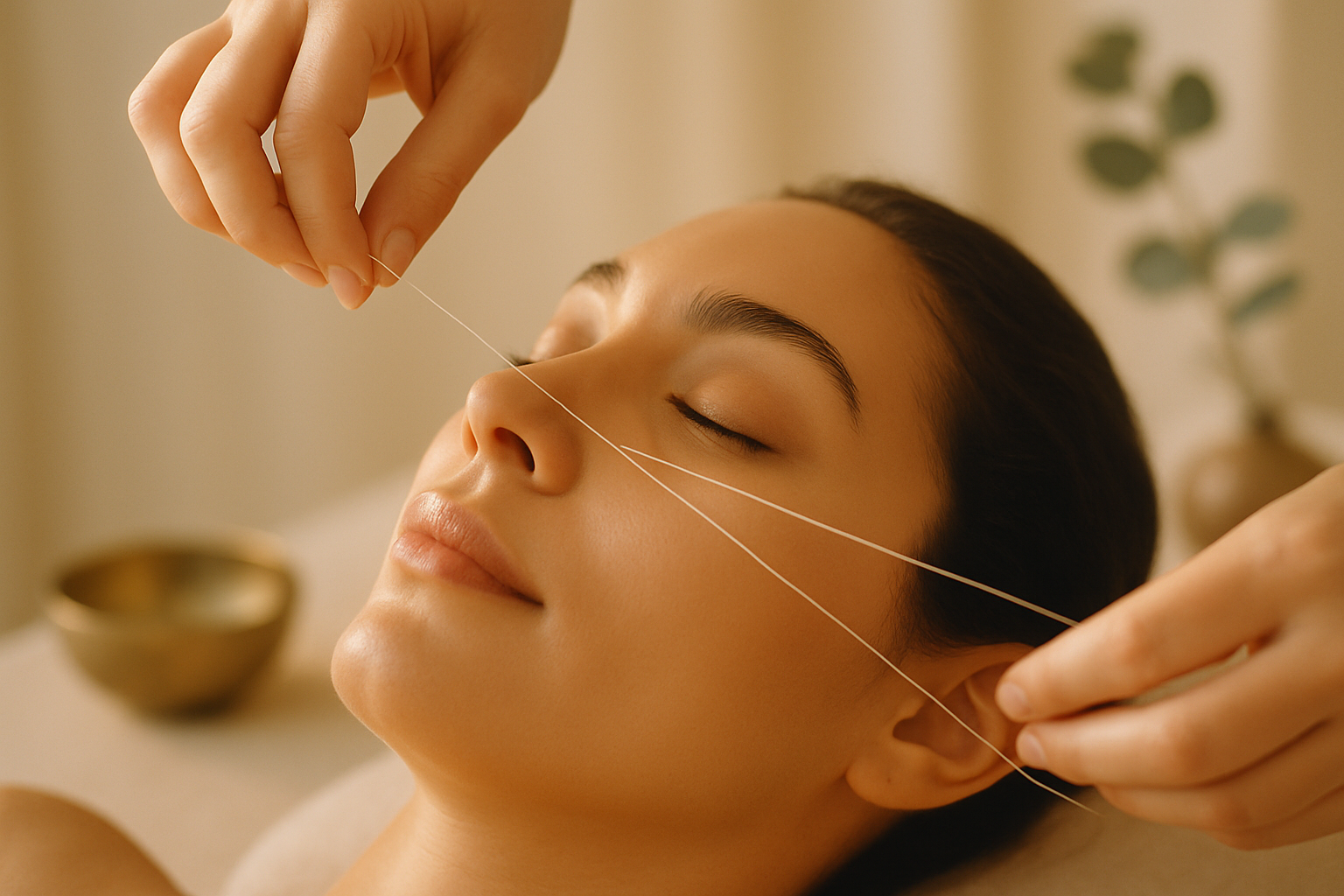
Threading uses a twisted cotton thread to catch and lift individual hairs (or a thin row of them) out of the follicle. Nothing touches your skin except the thread itself and the technician's fingers. There is no heat, no product, no adhesive.
Waxing applies a warm or room-temperature substance — traditional wax, organic sugar, or fruit wax — that grips the hair and, unavoidably, the top layer of skin. When it's pulled off, hair comes out with it, but so does a fine layer of dead skin (a mini exfoliation) and, in sensitive cases, a bit more than you bargained for.
That distinction — does the product touch my skin or not — is the whole game.
Pros and Cons at a Glance
Threading — the pros
- Extreme precision. Ideal for brows, upper lip, chin corners and the fine hair between the brows.
- No product on skin, so no reaction to wax resin, fragrance or heat.
- Safe on active acne, retinol users (with a short pause), and thin, mature skin.
- No lifting of skin, which means less risk of post-inflammatory pigmentation — a real concern for South Asian skin tones.
- Removes even the shortest hairs that wax can't grip.
Threading — the cons
- Slower for larger areas like full cheeks or sides of face.
- Can cause tiny red dots for 20–60 minutes, especially first-timers.
- Quality depends entirely on the technician's hand — a shaky thread gives an uneven brow.
- Slightly more ouch on the upper lip for some people.
Waxing — the pros
- Fast — full face done in minutes.
- Exfoliates as it removes hair, leaving skin visibly brighter.
- Great for peach fuzz (vellus hair) on cheeks and jawline, which threading struggles with.
- Regrowth often feels softer over time.
- Modern sugar and fruit wax formulations are far gentler than the traditional hot wax of a decade ago.
Waxing — the cons
- Heat + adhesive can trigger sensitivity, especially in Lahore's summer months when skin is already reactive.
- Not compatible with retinoids, strong actives, recent facials, or sunburn.
- Can lift skin if done incorrectly — the leading cause of dark patches around the mouth.
- Less precise for detailed brow shaping.
Which One Suits Your Skin Type
This is where most decisions go wrong. Match the method to the skin, not the trend.
Oily and combination skin
Both work, but threading tends to win around the brows and upper lip because wax residue and warmth can trigger congestion along the jaw and chin. For cheeks and sideburns, a gentle sugar wax is lovely — sugar rinses clean with water and doesn't leave a film.
Dry and mature skin
Threading, almost always. Dry, thinner skin lifts more easily under wax, which can leave micro-tears and lingering redness. If you do want the exfoliation benefit of wax, stick to fruit wax on the cheeks only and never on the fragile skin around the mouth.
Sensitive or rosacea-prone skin
Threading, without hesitation. No heat, no adhesive, no fragrance. Ask for a slower pace and a cold compress after. We use hypoallergenic thread at our threading service for exactly this reason.
Acne-prone skin
Threading over active breakouts, always. Waxing across pustules can spread bacteria and rip open healing skin. Once the skin is clear, occasional sugar waxing on non-acneic areas is fine.
Skin on prescription retinoids, tretinoin or acids
Threading only. Waxing on retinised skin is one of the most common causes of accidental skin removal — the kind that scabs. Pause actives 5–7 days before any wax.
Darker skin tones prone to pigmentation
Be cautious with wax on the upper lip and jaw — these are the areas where post-inflammatory hyperpigmentation loves to settle. Threading is the safer long-term choice for keeping the perimeter of your face even-toned.
Area-by-Area Recommendation
- Eyebrows: Threading. Precision is everything.
- Upper lip: Threading for sensitive/pigmentation-prone skin; sugar wax if you tolerate it well and want smoother regrowth.
- Chin: Threading — coarse hair, small area, easy to isolate.
- Cheeks and full face (peach fuzz): Fruit or sugar wax. Threading takes forever here.
- Sideburns: Either, but wax gives a cleaner blend into the hairline.
- Forehead / between brows: Threading.
What to Do Before and After — the Part Everyone Skips
Before:
- Skip retinol, AHAs and BHAs for 3–5 days before waxing.
- Don't book a wax the day after a strong facial or peel.
- Avoid caffeine an hour before threading if you're sensitive — it heightens pain perception.
After:
- No makeup on the treated area for 4–6 hours.
- No hot showers, steam or gym for 12 hours after waxing.
- Use a cool, fragrance-free moisturiser. Aloe gel works beautifully in Lahore's heat.
- Sunscreen the next morning is non-negotiable — freshly de-fuzzed skin pigments faster.
The Honest Verdict
Threading is the safer, more precise default for most South Asian faces, especially around the brows, lip and chin. Waxing earns its place for larger, softer areas and for anyone who wants that lit-from-within brightness that comes from a good exfoliation. The smartest women in our chair don't pick one — they combine both, area by area. That's the routine worth building.