· 5 min read
Threading vs Waxing for Face: Pros & Cons by Skin Type
A senior stylist's honest breakdown of threading versus waxing on facial skin — including which one actually suits oily, dry, sensitive and acne-prone skin in Lahore's climate.
Every week at the salon, a client sits down and asks the same question: should I thread my face or wax it? The honest answer is that neither method is universally better — it depends on your skin type, how coarse your hair is, how often you want to come in, and how your skin behaves in Lahore's weather. Below is the breakdown I give my clients in DHA Phase 3, minus the sales talk.
The Core Difference (And Why It Matters for Your Skin)
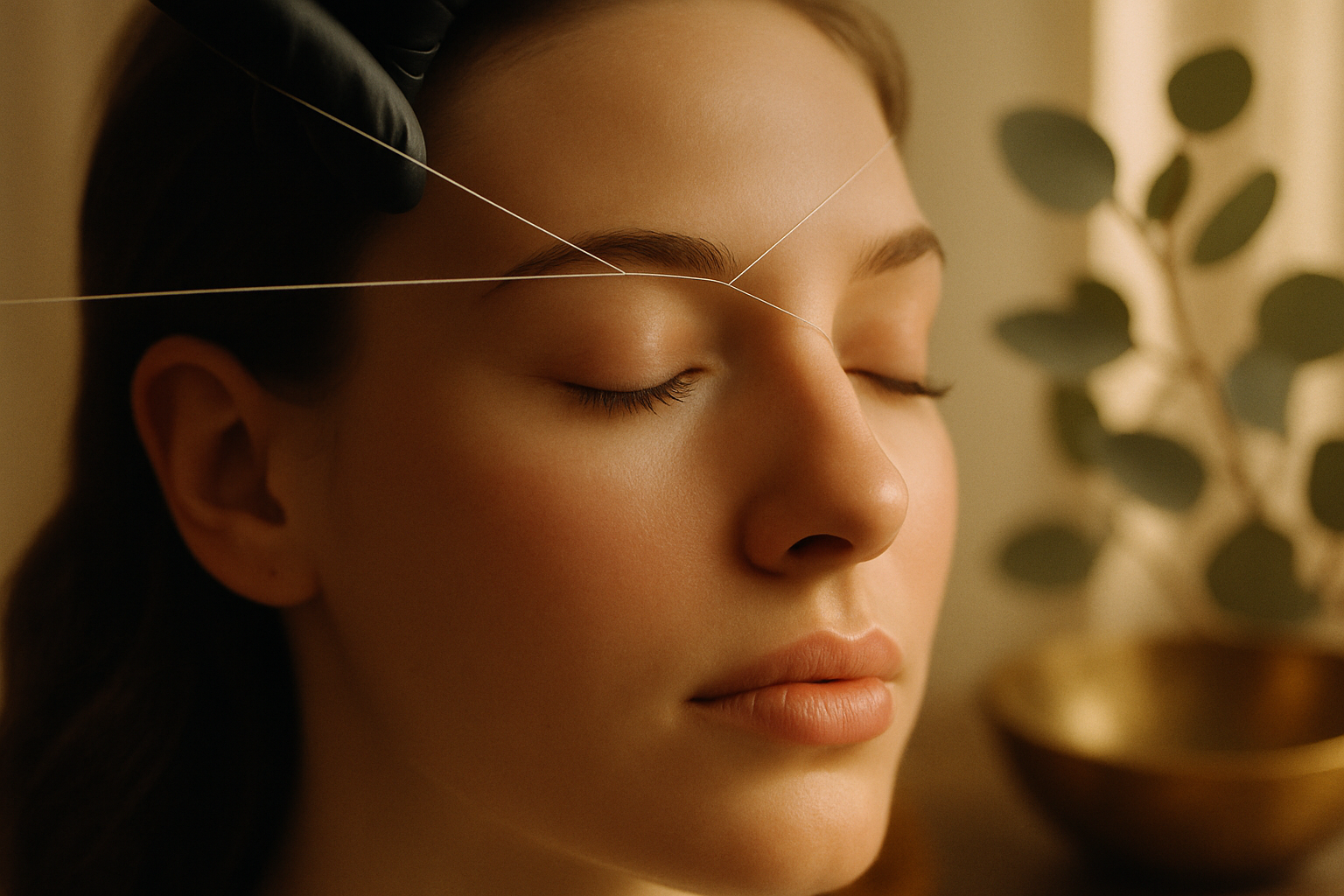
Threading lifts hair out of the follicle using a twisted cotton thread. Nothing touches your skin except that thread and the technician's fingers — no heat, no adhesive, no chemicals.
Waxing pulls hair out using a sticky medium (traditional wax, sugar paste, or fruit wax) that grips both the hair and the top layer of skin. When the strip comes off, so does a very fine layer of dead skin cells. That's why your face feels so smooth after a wax — you've essentially had a mild exfoliation at the same time.
This one difference drives almost every pro and con that follows.
Threading: Where It Shines and Where It Falls Short
Pros
- Precision. Nothing beats thread for brows, upper lip corners, and shaping around the chin. A skilled technician can remove a single row of hair at a time.
- No chemical contact. Safe for skin on retinoids, mild acids, or acne medication (where waxing is a hard no).
- Good for sensitive and reactive skin. No heat, no adhesive residue.
- Grabs fine hair that wax sometimes misses, including the baby-fine hair along the jawline.
Cons
- Can cause temporary redness and tiny red dots, especially on thin or rosacea-prone skin.
- Hurts more in short, sharp bursts (though regulars tell me they stop noticing after the third or fourth session).
- Slower than waxing if you're doing full face.
- An inexperienced hand can break hair at the surface instead of pulling from the root, which means faster regrowth.
At the salon we offer both classic threading with thread and a gentler threading with fruit wax finish, which calms the skin immediately after.
Waxing: Where It Shines and Where It Falls Short
Pros
- Fastest way to clear a full face — cheeks, sides, forehead, upper lip and chin in one sitting.
- Mild exfoliation gives that glassy, makeup-ready finish for 2–3 days.
- Hair grows back softer and finer over time with consistent waxing.
- Modern fruit and sugar waxes are far gentler than the old honey wax most of us grew up with.
Cons
- Not safe on skin using retinol, tretinoin, strong AHAs/BHAs, isotretinoin, or recent chemical peels — the wax can lift live skin along with the hair.
- Can trigger breakouts on acne-prone skin if the wax is too occlusive.
- Heat-based waxes are a bad idea in Lahore summer on freshly sun-exposed skin.
- Risk of pigmentation if done incorrectly on deeper skin tones.
If you prefer waxing, I almost always steer clients toward waxing with organic sugar or waxing with fruit wax for the face — they're water-soluble, lower-temperature, and far kinder than traditional strip wax.
What to Choose by Skin Type
Oily and acne-prone skin
Stick to threading. Wax residue, even when cleaned properly, can clog already-congested pores and trigger a breakout 24–48 hours later. Thread also lets us work around an active pimple without disturbing it. If you really want the exfoliation benefit of wax, book a facial separately instead.
Dry and dehydrated skin
Fruit wax is usually a winner here — it removes dead flakes along with hair, so your moisturiser absorbs better afterwards. Just avoid waxing the day after a hot shower, hammam or exfoliating mask.
Sensitive, reactive or rosacea-prone skin
Threading, every time. And ask for a technician who works slowly in short sections rather than long sweeps. Follow with a cool compress and a fragrance-free moisturiser.
Mature skin (40s and up)
Skin loses elasticity over time, and aggressive waxing can tug at delicate areas around the mouth and jawline. I recommend threading for the brows and upper lip, and gentle sugar wax only on the cheeks if needed.
Pigmentation-prone or melasma-prone skin
Avoid heat. That means no hot wax. Either thread, or use room-temperature sugar paste. Always apply sunscreen immediately after — freshly treated skin pigments more easily under Lahore's sun.
Combination skin (most of us)
Mix and match. Thread the brows, upper lip and chin for precision; sugar-wax the sides of the face and forehead for speed and smoothness.
Aftercare That Actually Matters
Most post-treatment issues aren't caused by the hair removal itself — they're caused by what you do in the next 24 hours.
- No makeup for 6–8 hours after either treatment. Freshly opened follicles are an open door for bacteria.
- Skip actives for 48 hours — no retinol, vitamin C, glycolic, salicylic or scrubs.
- Sunscreen is non-negotiable, especially after waxing. Freshly exfoliated skin pigments fast.
- Avoid gym, sauna and steam for 24 hours. Sweat sitting in open follicles is the fastest route to those little red bumps everyone blames on the threading itself.
- If you break out in small bumps, a cool chamomile compress and a dab of pure aloe will settle most reactions overnight.
If your face is already stressed from pollution and heat, pair your hair removal with a calming facial or deep cleansing treatment on a separate day — not the same appointment. Your skin will thank you.
The Honest Verdict
For most women in Lahore, the answer isn't either/or — it's knowing which tool suits which part of your face and your current skin situation. Threading wins on precision, sensitive skin and anyone on actives. Waxing wins on speed, smoothness and that pre-event glow. A good technician will ask about your skincare routine before picking up a thread or a spatula — if they don't, that's your cue to find a better one.