· 5 min read
Keratin Treatment Myths Debunked for South Asian Hair
From 'it'll ruin your hair' to 'it works on everyone the same way' — we separate keratin fact from fiction for thick, textured Pakistani hair.
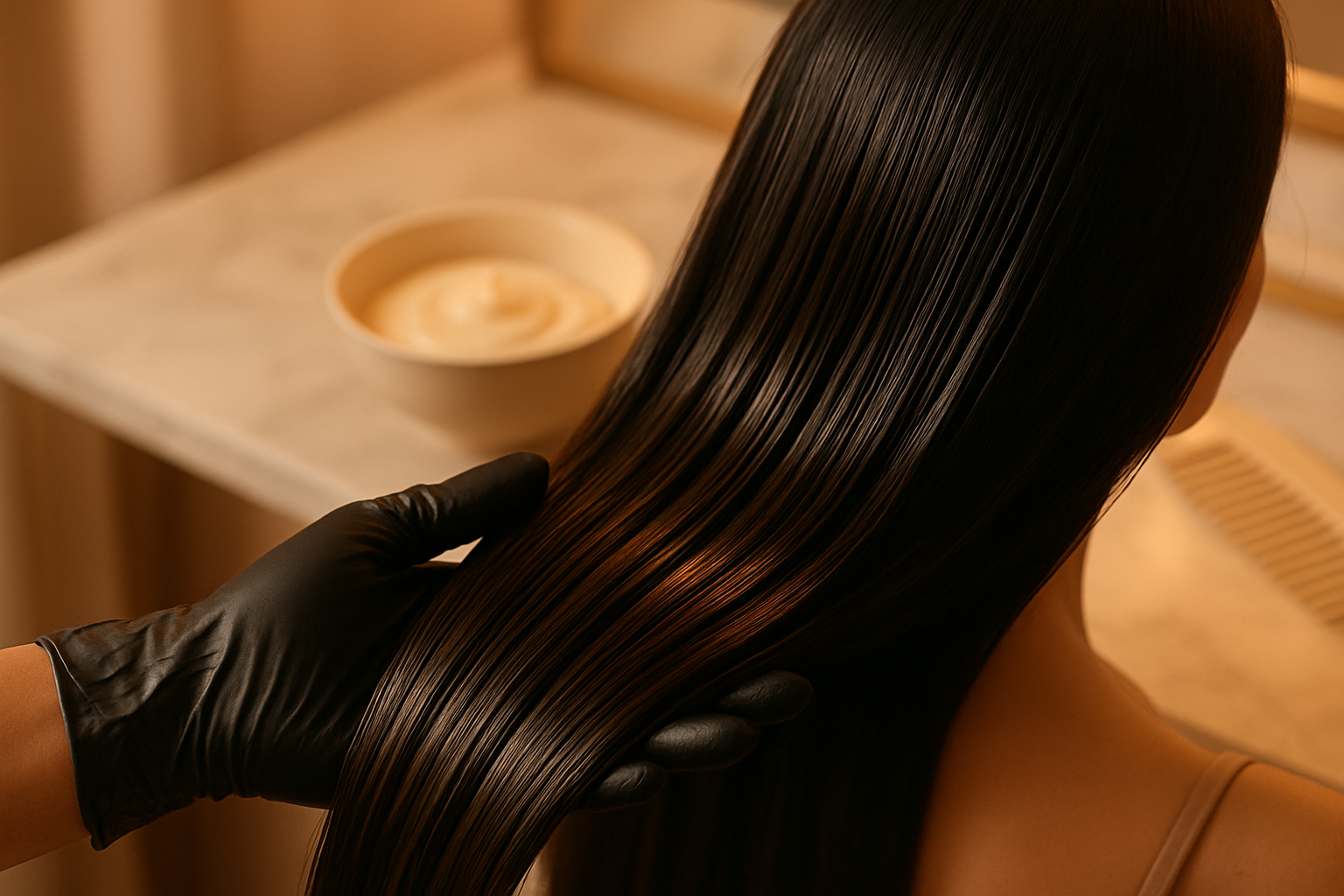
Keratin treatments are easily the most misunderstood service on a Pakistani salon menu. One friend swears it changed her hair forever; another insists it 'burned' hers off. The truth, as usual, sits somewhere in the middle — and it depends enormously on your hair type, the formula used, and the hands doing the work. South Asian hair is thick, dense, often coloured, and frequently exposed to Lahore's hard water and dust. That combination means our hair behaves differently from the European hair most international keratin tutorials are filmed on. So before you book (or boycott) a smoothing treatment, let's clear the air on what's actually true.
Myth 1: Keratin Treatments Are the Same as Rebonding
This is the single biggest misconception we hear at the salon. They are not the same service, and they do not produce the same result.
- Rebonding chemically breaks the disulfide bonds in your hair and reshapes them poker-straight. It's permanent on the treated section and the regrowth line is sharp.
- Keratin (smoothing) treatments coat and infuse the hair shaft with a keratin-based formula, sealed in with heat. Hair becomes smoother, shinier, and far less frizzy — but retains movement and a soft bend. It washes out gradually over 3–5 months.
If you want stick-straight hair forever, keratin is the wrong service. If you want your own hair, but calmer, glossier, and 70% less frizzy, it's exactly right. Our team at the hair treatments studio will always talk you through which one suits your goals before mixing a single product.
Myth 2: Keratin Will Damage Your Hair
The fear here is fair — older formaldehyde-heavy formulas did stress the hair and irritate the scalp. But the category has evolved significantly. Modern professional keratin systems (the ones reputable salons in DHA actually use) rely on amino acids, hydrolysed proteins, and low-aldehyde or aldehyde-free chemistry.
When damage does happen, it's almost always one of three things:
- The wrong formula for the hair's current condition (e.g., a strong system used on already-bleached hair).
- Iron temperature set too high — South Asian hair generally needs 200–230°C, not the 450°F blast tutorials sometimes show.
- No bond-building prep before the service on chemically processed hair.
Done properly, a keratin treatment leaves hair healthier looking than before because the cuticle is sealed flat. Done badly, anything can go wrong. The variable is the technician, not the treatment itself.
Myth 3: It Won't Work on Very Thick or Curly Pakistani Hair
It absolutely works — but expectations need calibration. Keratin is a smoothing service, not a curl-removal service. On classic South Asian wave-to-loose-curl hair, you'll see:
- Dramatically reduced frizz, especially in humidity
- A looser, more elongated curl pattern
- Blow-dries that take half the time
- Hair that air-dries to a soft, polished wave instead of a triangle of frizz
For very tight curls or coarse 4-type textures, a stronger system can be selected for a straighter finish — but you should walk in knowing whether you want to keep your curl pattern or relax it. These are two different conversations with your stylist.
What about coloured hair?
Good news: keratin and colour are friends. In fact, many of our clients who do colour and highlights book a keratin two weeks after a balayage to lock in shine and reduce the dryness colour can cause. Just never do both on the same day.
Myth 4: One Treatment Lasts Forever (or Conversely, Only a Few Weeks)
Neither extreme is true. A professionally done keratin treatment on South Asian hair typically lasts 3 to 5 months, depending on:
- How often you wash (2–3 times a week is the sweet spot)
- Whether you use sulphate-free and sodium chloride-free shampoo — non-negotiable
- Chlorine exposure (pools shorten it dramatically)
- Hard water at home — a real issue in many Lahore neighbourhoods
Clients who follow aftercare get the full five months. Clients who shampoo daily with whatever's in the shower see it fade by week eight and then blame the treatment. Aftercare is 50% of the result.
Myth 5: You Can Replicate It at Home with a Box Kit
Drugstore 'keratin' masks and box smoothing kits are not the same product class as a salon service. Masks deposit a tiny amount of protein on the surface — useful for a week of softness, not for structural smoothing. Box kits often skip the precise sectioning, neutralising, and controlled heat work that make a real treatment safe.
The real risks at home are uneven application (patchy frizz lines), over-processing the ends, and skipping the 48-hour 'no tucking behind ears, no hair ties' rule that lets the keratin set properly. A botched home job often costs more to correct than the salon service would have cost in the first place.
What to Actually Expect at the Salon
If you're booking your first treatment, here's what a properly run appointment looks like:
- Consultation — your stylist examines porosity, previous chemical history, and goals.
- Clarifying wash — usually two rounds, to strip product and minerals.
- Application — section by section, kept off the scalp by a few millimetres.
- Processing time — varies by formula, often 20–40 minutes.
- Blow-dry and flat-iron sealing — the slowest, most skilled part. This is where experience shows.
- Aftercare brief — what to use, what to avoid, when to wash.
Plan for 2.5 to 4 hours depending on length and density. Bring a book. Eat first.
Is It Right for You?
Keratin is worth it if you spend more than ten minutes a day fighting frizz, if Lahore's humidity ruins every blow-dry, if your hair has lost shine after colouring, or if you simply want a lower-maintenance morning. It is not right if your hair is severely bleached and fragile (rebuild first), if you're pregnant (we wait), or if you genuinely love your natural curl pattern and want to keep it intact.
The best way to know is a proper in-person consultation. Bring photos of what you're hoping for, and be honest about your wash routine — a good stylist will tell you straight whether you're a candidate or whether a deep-conditioning hair treatment would serve you better first.
Done right, keratin isn't a magic trick or a hair-killer. It's just very good chemistry, applied with care, to hair that deserves it.