· 5 min read
Mehndi Color: How to Keep Your Henna Deeper, Longer
From paste removal to sealing the stain, here is exactly how to coax a richer, longer-lasting mehndi color from your bridal or eid henna.
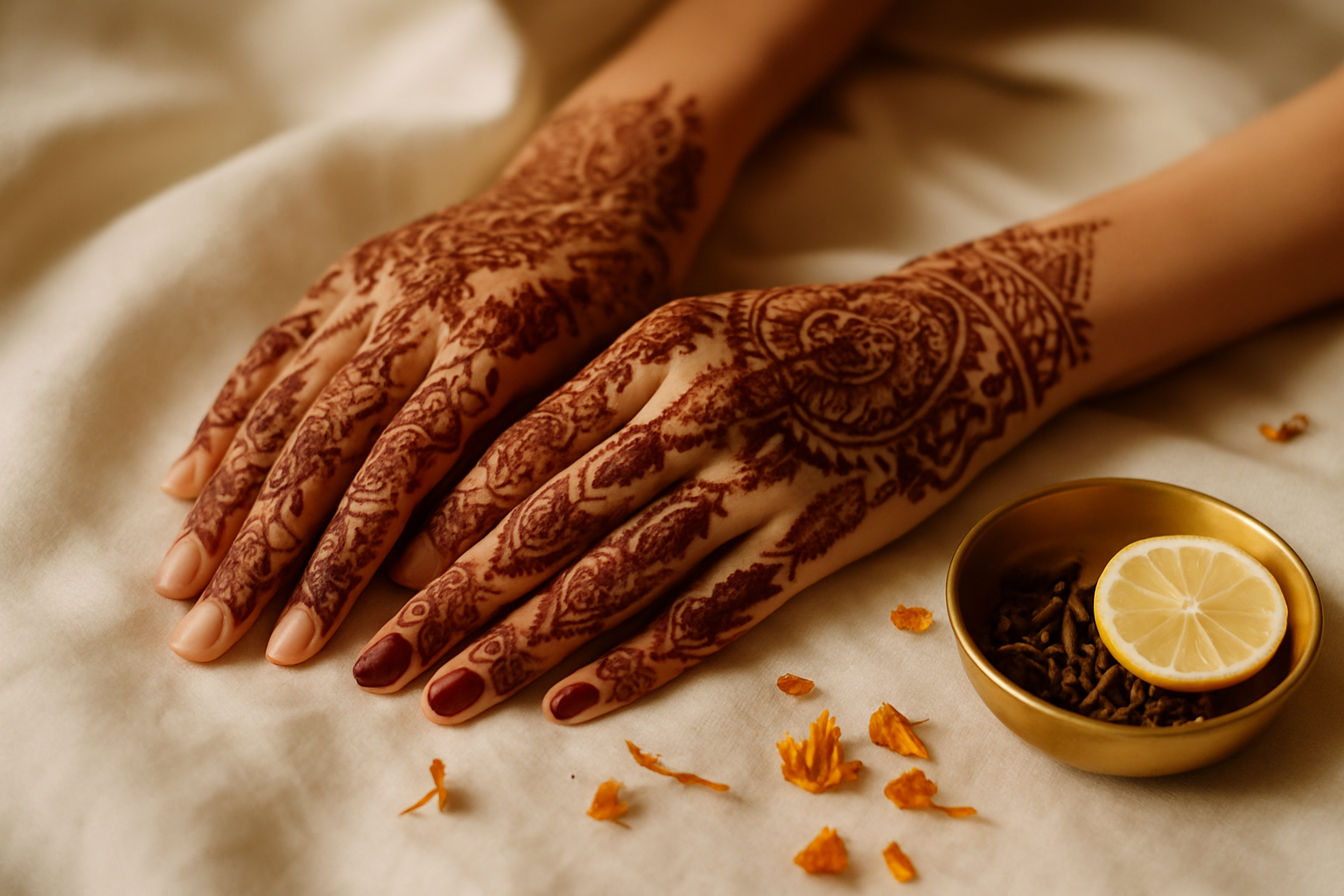
There is a particular heartbreak that comes with peeling off your mehndi the morning after a function and finding a pale orange ghost where you hoped for that deep, almost-black burgundy. Whether you are a bride preparing for her rasm-e-henna or someone getting a quick design for Eid, the color you walk away with is rarely just luck. It is the sum of paste quality, prep, body chemistry, and what you do in the 48 hours after application. Here is the honest, salon-tested guide we share with our clients in DHA Phase 3 — no folk myths, just what actually works.
Why Mehndi Stains the Way It Does
Henna stains your skin because of a molecule called lawsone, which binds to the keratin in your top skin layer. Fresh paste releases lawsone slowly, the stain starts off pumpkin-orange, and then oxidises over 24–72 hours into the deeper maroon, brick or near-black tones you actually want.
Three things decide how dark you finish:
- The paste itself — fineness of the powder, sugar/lemon ratio, essential oils, and how long it was allowed to release dye before application.
- Contact time — how long the paste sits on warm, undisturbed skin.
- Aftercare — whether you protect that fresh stain from water, soap and friction while it oxidises.
Skip any one of these and even the most expensive cone underperforms.
Prep Your Skin Before the Cone Touches You
Most clients focus on what happens after application. The truth is, the 24 hours before matter just as much.
The day before
- Get any waxing, threading or bleach done at least 24 hours in advance, never the same day. Freshly waxed or bleached skin is irritated and stains unevenly.
- Exfoliate gently. A mild scrub on hands, feet and forearms lifts off dead skin so the lawsone binds to fresh keratin. Skip harsh acids.
- Skip rich body lotions, oils, and self-tanners on the areas being hennaed. Any barrier between paste and skin dulls the result.
Right before application
Wipe the area with a little eucalyptus oil or, if you do not have it, plain alcohol-free toner. This opens the pores slightly and removes invisible residue. Make sure your hands and feet are warm — cold extremities take stain poorly, which is why winter mehndi often looks paler.
During Application: The Boring Bit That Matters Most
You have heard it a hundred times because it is true: the longer the paste stays on, the darker the stain. A 30-minute mehndi for a casual dinner will always look orange. For real depth, you want 6 to 8 hours minimum, and brides should aim for overnight.
A few things to actually do while the paste is on:
- Stay warm. Cold air slows dye release. Sit in a warm room, sip warm chai, keep a shawl over your arms if it is winter.
- Do not let the paste crack early. As it begins to dry, dab a cotton ball with a sugar-lemon mix (one teaspoon sugar dissolved in two tablespoons lemon juice) very lightly over the design. Too much will make the stain blotchy; too little lets it flake off. Two or three light dabs over a few hours is the sweet spot.
- Avoid water completely. This includes washing your hands, sweating heavily, or going outside on a humid Lahore evening with bare arms.
- Do not pick. Tempting, but every flake you knock off cuts short the oxidation.
How to Remove Paste — Without Killing the Color
This is where most people undo all their patience. Never wash mehndi off with water for the first 12 hours after removal. Water at this stage locks in the lighter orange shade.
Instead:
- Scrape the dried paste off with the back of a butter knife or a dry cloth.
- Rub the area with mustard oil, coconut oil or olive oil. The warmth helps oxidation, and the oil seals in lawsone.
- If any stubborn bits remain, use more oil, not water.
- For the next 12–24 hours, keep your hands and feet dry. Eat with a fork if you must.
This single rule — no water for at least 12 hours after removal — is the biggest reason some brides finish nearly black while others stay orange.
Sealing and Deepening the Color
Once the paste is off, the stain continues to oxidise for another 36–48 hours. You can nudge it darker with a few classic tricks that genuinely work:
- The clove method. Heat a pan dry, throw in a handful of cloves, and hold your hennaed hands over the warm fragrant steam for a minute or two. Repeat two or three times. The warmth and the natural oils deepen the tone noticeably.
- Vicks or balm overnight. A thin layer on the design before bed traps warmth and moisture. Wear cotton gloves or socks to protect your bedding.
- Keep moisturising with a natural oil rather than scented lotions for the first two days.
Avoid swimming pools, hot showers, dishwashing without gloves, and harsh hand sanitiser for 48 hours. Chlorine, soap and alcohol all fade fresh henna fast.
Making the Color Last Longer Once It's Set
Mehndi naturally fades as your skin sheds. A typical stain lasts 1–3 weeks on hands and longer on feet. To stretch it:
- Wear gloves for dishes and cleaning.
- Skip exfoliating scrubs and AHA body washes on the design.
- Avoid chlorine pools and very hot water.
- When you book a medi-pedi before the wedding, schedule it before your mehndi, not after — the buffing and soaking will lift the stain.
- The same logic applies to your nails and any waxing with organic sugar on your arms. Get them done first, mehndi last.
For brides specifically
If you are sequencing pre-wedding appointments, the smart order is: hair colour and hair treatments first, then waxing and threading, then facial two to three days before mehndi night, then the henna itself. Your makeup trial and bridal prep can happen alongside, but anything that involves scrubbing or soaking your hands and feet should be done before the mehndi cone touches you.
A deeper mehndi color is not magic, and it is definitely not a more expensive cone. It is patience during application, no water after removal, and a little warmth to seal it in. Do those three things and you will see the difference the morning after — that quiet, satisfying shock of looking down at your hands and finding the colour you actually wanted.