· 5 min read
Nail Care After a Manicure: Make Polish Last Twice as Long
Your manicure doesn't have to chip by day four. A senior stylist's guide to sealing, protecting and extending your polish — from Lahore's dust to daily dishwashing.
There's a specific heartbreak that comes with paying for a beautiful manicure on Saturday and watching the first chip appear on Tuesday. In Lahore, our nails have to survive dust, hard tap water, hot chai, dishwashing, hand sanitiser and the occasional impromptu roti-making session — so polish that lasts a full two weeks isn't luck, it's technique. The good news: 80% of what makes a manicure last happens after you leave the salon chair. Here's exactly how to protect your investment.
Why Your Manicure Chips Faster Than It Should
Before we get to the fixes, understand what's actually breaking down your polish. Chips almost never start on the nail bed — they start at the free edge (the tip) or where the polish meets the cuticle. Water is the biggest enemy: it swells the natural nail plate, which then contracts as it dries, lifting the polish film like paint on a warping wall. Heat, harsh detergents, acetone-based sanitisers and mechanical trauma (typing hard, opening bottle caps with your nails, peeling stickers) do the rest.
In Lahore specifically, three things quietly wreck manicures:
- Hard water in most DHA and Cantt homes leaves mineral residue that dulls the top coat.
- Sanitisers with high ethanol content dissolve the top layer of polish over time.
- Air-conditioned to hot-outdoor transitions cause micro-expansion in the nail plate.
Once you know what's attacking your nails, protecting them becomes obvious.
The First 24 Hours Are Everything
Even with fast-dry top coats and LED-cured gel, polish continues to harden and bond for a full day after application. What you do in that window sets the ceiling for how long the manicure lasts.
For regular polish:
- Avoid hot water for at least 2 hours — no long showers, no washing dishes, no dough-kneading.
- Skip the gym that evening. Sweat and grip work against soft polish.
- Sleep in loose cotton, not silk — silk pillowcases can dent semi-set polish surprisingly easily.
- Reapply a thin layer of top coat the next morning. This is the single most underused trick.
For gel polish: it's cured hard when you leave, but the surrounding skin isn't. Avoid oil-heavy hand creams for the first 12 hours, because oil can seep under the still-settling cuticle seal.
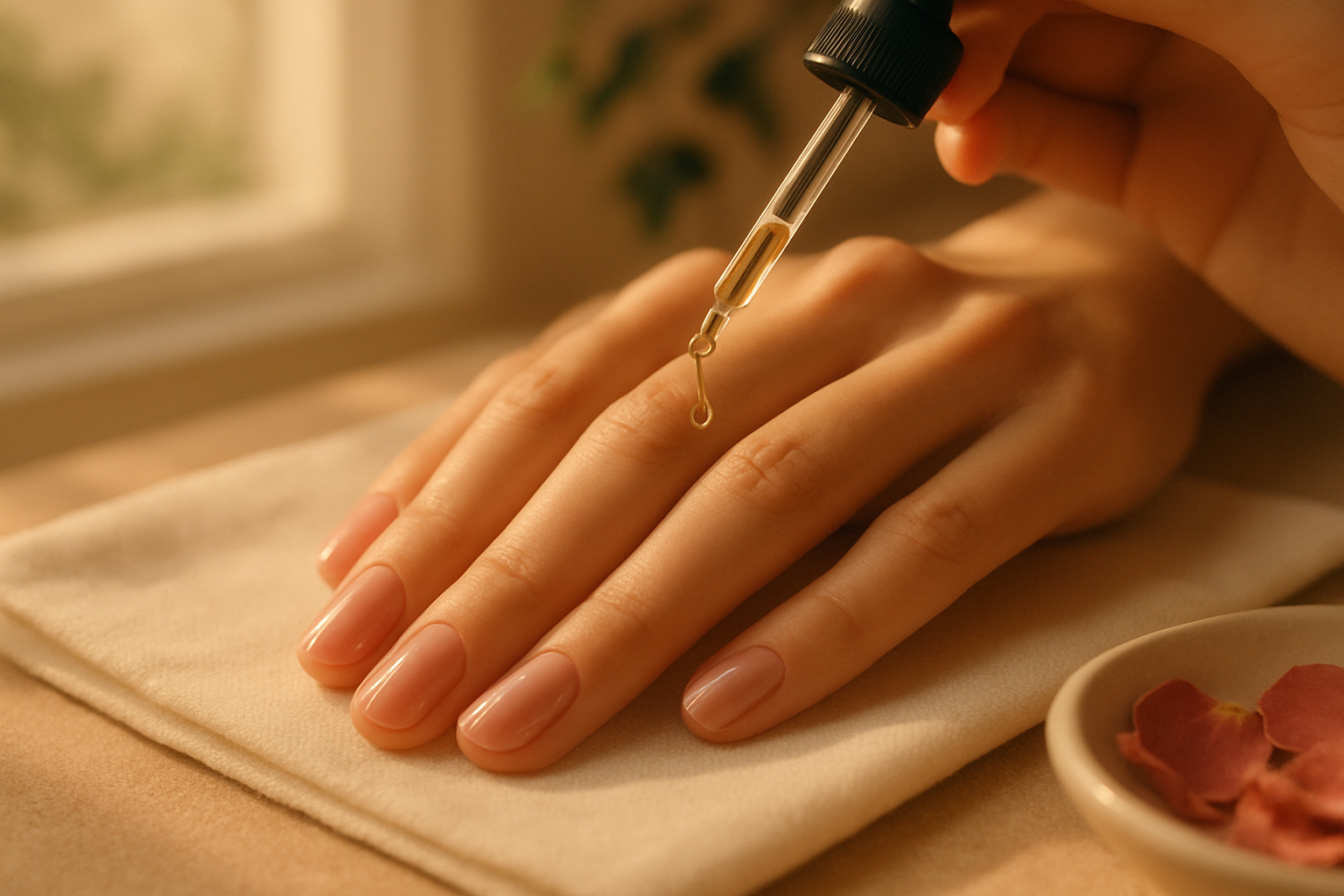
At our Nails studio we always send clients out with a small vial of cuticle oil and clear instructions on when to start using it — usually the next morning, not immediately.
The Daily Habits That Double Your Wear Time
Once you're past day one, longevity comes down to consistency. None of these takes more than 30 seconds.
Cuticle oil, twice a day, forever
This is non-negotiable. A well-oiled cuticle keeps the nail plate flexible, which means polish flexes with the nail instead of cracking off it. Jojoba, sweet almond or a dedicated nail oil all work. Apply morning and night, and massage it in for ten seconds — the massage matters more than the product.
Refresh your top coat every 3 days
A thin swipe of clear top coat every third day rebuilds the shine, seals any micro-chips at the tip, and can genuinely extend a regular manicure from 7 days to 14. Always run the brush along the free edge of the nail — that's where chips begin.
Wear gloves. Actually wear them.
Rubber gloves for dishwashing, cleaning, and any contact with surf, Vim or bleach. Cotton-lined ones if your hands sweat. This one habit alone will change your nails' life.
Stop using your nails as tools
Car keys, staple removers, tape edges, SIM tray pins — use an actual tool. Every time you pry with your nail tip, you're creating a stress fracture in the polish.
Product Choices That Quietly Matter
Not all polishes and top coats are equal, and neither are the hand products you pair with them.
- Choose a hand cream without heavy silicones near the nail. Silicones can migrate under the polish edge. Apply cream to the back of the hand and palm, and finish with a separate oil at the cuticle.
- Alcohol-based sanitiser is fine, but pat dry. Don't rub your nails against each other while it's wet — that friction is a polish killer.
- Avoid acetone-based nail polish removers between manicures, even for a small touch-up. Acetone dries the nail plate and weakens the surrounding polish.
- File in one direction only. If a nail snags mid-week, don't saw back-and-forth — glide the file from outer edge toward the centre.
For clients who genuinely can't baby their hands (new mums, doctors, teachers, anyone in a hands-on job), we usually recommend gel or a hybrid system through our Medi/Pedi service — the cured finish is simply more resilient to Lahore daily life.
When to Do a Salon Refresh vs a Full Redo
A good manicure should have a middle chapter, not just a beginning and an end. Around day 7–10, most nails need a small intervention rather than a full removal.
- French tip or nude polish? A quick tip-refresh at the salon adds a week of wear.
- Deep or dark colour? Growth at the cuticle becomes obvious around day 10 — this is when a fresh coat or a gel infill makes sense.
- Any lifting on gel? Do not pick. Come in for a proper removal. Peeling gel takes layers of your natural nail with it, and rebuilding that takes months.
If you're in DHA Phase 3 or nearby, walk-in touch-ups at Rabbiz are quick — usually under 20 minutes — and they meaningfully extend your original manicure without the cost of a full new set.
Building Stronger Nails Underneath
The polish is only as strong as the nail beneath it. If your nails peel, split or bend easily, no top coat will save you. Focus on:
- Biotin-rich foods (eggs, almonds, seeds) and adequate protein — hair and nails share the same building blocks.
- Hydration. Dehydrated nails are brittle nails.
- Rest periods between gel sets. Every 3–4 gel manicures, do one regular polish cycle to let the plate breathe.
- A monthly professional treatment. A proper cuticle care and buffing session through our Medi/Pedi keeps the growth healthy so future manicures adhere better.
A manicure isn't really about the polish — it's about the way beautifully-kept hands make you feel every time you reach for a cup or shake someone's hand. Treat the aftercare as part of the ritual, not an afterthought, and you'll find that two-week wear stops being a lucky accident and starts being the norm.