· 5 min read
Sugar Wax vs Fruit Wax vs Traditional Wax: Gentlest Pick
Sugar, fruit and traditional wax all remove hair — but they treat your skin very differently. Here's how to choose the gentlest one for you in Lahore.
If your skin turns red for an hour after waxing, if you break out in little bumps around your bikini line, or if your last salon visit left your legs feeling stripped and raw — the type of wax being used matters more than most women realise. In Lahore, you'll typically be offered three options: organic sugar wax, fruit wax, or traditional (hot or cold) wax. They all pull hair out from the root, but their formulas, temperatures and after-effects are genuinely different. Here's an honest breakdown so you can pick what your skin will actually thank you for.
What Each Wax Is Actually Made Of
Before we compare gentleness, it helps to know what's touching your skin.
Traditional wax is usually a resin-based formula — beeswax or synthetic polymers mixed with oils, fragrances and sometimes rosin. It's applied warm, adheres firmly to both hair and the top layer of skin, and is pulled off with a cloth strip (soft wax) or by hand (hard wax).
Fruit wax is a newer generation of soft wax infused with fruit extracts — berry, plum, apricot — plus vitamins and glycerin. The base is still often a mild resin, but the formula is designed to be less sticky on skin, cooler in application temperature, and gentler on pull.
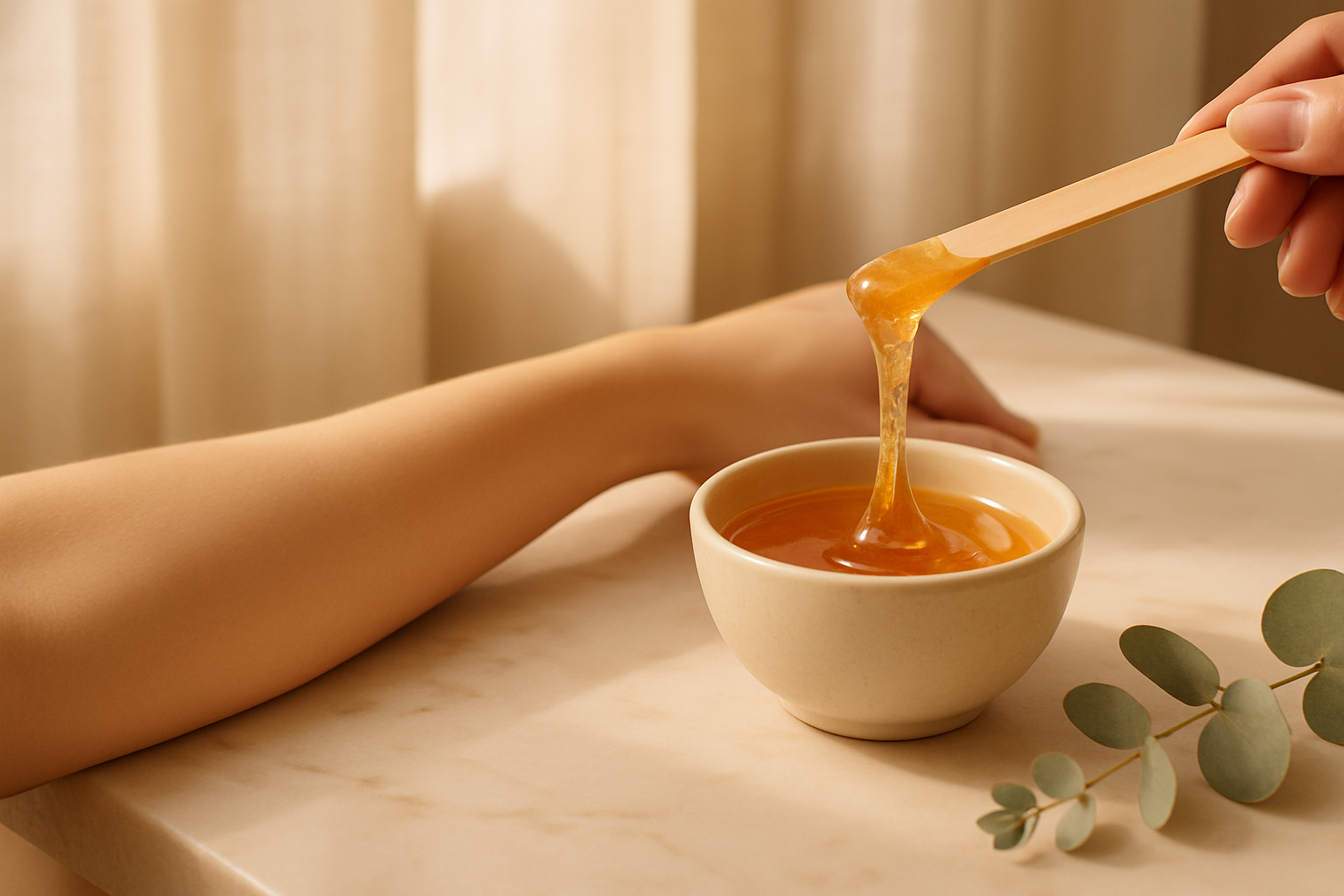
Sugar wax (sugaring) is the oldest of the three. It's literally sugar, lemon juice and water, cooked into a caramel-like paste. It's applied at body temperature or just slightly warm, adheres only to hair (not living skin cells), and is flicked off in the direction of hair growth.
The Gentleness Ranking — And Why
If we're grading purely on how kind each option is to your skin, the order is fairly consistent:
- Sugar wax — gentlest
- Fruit wax — middle ground
- Traditional wax — most aggressive
Here's the reasoning:
- Temperature: Traditional wax is applied hot enough to occasionally cause micro-burns on thin skin (upper lip, bikini). Fruit wax runs cooler. Sugar paste is barely warm.
- Adhesion: Sugar bonds only to hair. Traditional and fruit wax grip the stratum corneum too, which is why you sometimes see flaking or a shiny "peeled" look afterwards.
- Direction of pull: Sugar is removed with hair growth, which means less breakage at the follicle and fewer ingrowns. Traditional and fruit wax are pulled against growth — faster, but harder on the follicle.
- Ingredients: Pure sugar paste has three ingredients. Traditional wax can contain a dozen, several of them fragrance and preservative allergens.
That said, gentlest isn't always best for you. Read on.
Which One Suits Your Skin Type
Sensitive, reactive or eczema-prone skin
Go with organic sugar waxing. It's the safest bet for anyone who flushes easily, has rosacea tendencies, or gets histamine bumps after traditional wax. It's also water-soluble, so residue washes off with plain water — no oily solvents rubbing into freshly opened pores.
Normal skin with coarse or stubborn hair
This is where fruit wax shines. Sugar paste can struggle with very thick, wiry hair (think underarms or male-pattern facial hair). Fruit wax has enough grip to lift coarse hair cleanly on the first pass, without the harshness of traditional resin wax. Our fruit wax service is popular for full-leg and arm sessions.
Oily, acne-prone skin (especially on the back or chest)
Sugar wax again. Traditional wax can trap sebum and dead skin under its resin base, which for some clients triggers small pustules 24–48 hours later. Sugar's clean, water-rinse finish avoids this.
Very dry or mature skin
Fruit wax is a reasonable middle path — the added glycerin and fruit oils leave a small emollient layer behind. Sugar is also fine but can feel drying if not followed with a good post-wax oil.
First-time waxers
Start with sugar. If your pain tolerance is high and hair is coarse, graduate to fruit wax later.
The Ingrown Hair Question
Ingrowns are the most common waxing complaint we hear at the salon, especially on bikini lines and inner thighs. The mechanics matter:
- Traditional wax often snaps hair below the surface rather than pulling the whole shaft cleanly. The broken hair then curls back into the follicle → ingrown.
- Fruit wax performs slightly better because of its cleaner release.
- Sugar wax, pulled in the direction of growth, extracts the fullest length of hair with the least breakage — statistically the lowest ingrown rate of the three.
If you've battled ingrowns for years and nothing has helped, switching from traditional to sugar for two to three cycles is often the single biggest fix.
What About Pain?
Honestly, pain is more about technique than wax type. A skilled therapist holding the skin taut and pulling at the correct angle will hurt less with traditional wax than a rushed one using sugar. That said:
- Sugar feels like a firm tug — less sharp, more spread-out sensation.
- Fruit wax feels similar to traditional but slightly softer.
- Traditional wax has the sharpest sting, especially on sensitive zones.
For bikini and underarm work, most of our DHA Phase 3 clients prefer sugar after trying it once.
Aftercare That Actually Matters
Whichever wax you choose, the 24 hours afterwards decide whether your skin stays calm or throws a tantrum:
- Skip hot showers, steam and sauna for a full day.
- No perfumed lotions, deodorant or self-tanner on waxed areas for 24 hours.
- Start gentle exfoliation (a soft washcloth or mild AHA lotion) from day 3 onwards to prevent ingrowns.
- Avoid tight synthetic fabric right after a bikini wax — cotton underwear only for the first night.
- Book your next appointment at the 3–4 week mark; consistent cycles weaken the follicle over time.
For facial hair specifically, some clients prefer threading with fruit wax finish — threading for precision on brows, followed by a light fruit wax pass for peach fuzz.
The Bottom Line
If gentleness is your top priority, sugar wax wins — every time. If you have coarse hair or want a longer-lasting smoothness with a slight nourishing finish, fruit wax is a beautiful compromise. Traditional wax still has its place for speed and cost, but at Rabbiz we rarely recommend it for sensitive zones or clients with reactive skin. Book a small patch area first if you're switching methods — your skin will tell you within one session which formula it prefers.