· 5 min read
Post-Wedding Hair Recovery: Repair Styling Damage Fast
Weeks of trials, sprays, tongs and tight buns leave bridal hair thirsty and fragile. Here's a stylist-led recovery plan to get your length, shine and density back.
By the time the walima plates are cleared, your hair has been through more in three weeks than it usually endures in a year. Repeated blow-outs, curling tongs at 200°C, industrial-strength hairspray, kilos of jewellery pinned into a bun, and often a colour or highlight session squeezed in the week before. If your scalp feels tender, your ends look like straw, and clumps are coming out in the shower — you are not imagining it, and it is very fixable. Here is the exact recovery plan we walk our brides through at Rabbiz Salon in DHA Phase 3 once the events are done.
First, Understand What Actually Got Damaged
Bridal styling stresses hair in three separate ways, and each one needs a slightly different fix.
- Heat damage from tongs, wands and flat irons cracks the cuticle and boils out internal moisture. Hair looks dull, feels rough, and won't hold a curl anymore.
- Chemical load from hairspray, setting sprays, gels and dry shampoo coats the strand and builds up on the scalp, which starves the follicle of oxygen and slows growth.
- Traction stress from tight buns, U-pins, hair extensions, dupatta pins and heavy jhoomars pulls at the roots — especially around the hairline and crown. This is what causes the small bald patches and the fistful in the shower a week later.
You need to address all three, in order. Skipping straight to a keratin treatment without clearing the buildup is the most common — and most expensive — mistake we see.
Week 1: Detox and Calm the Scalp
Before any deep conditioning, your scalp needs a clean slate.
Do a proper clarifying wash
Use a sulphate-based clarifying shampoo (yes, sulphates here — this is the one time you want them) and shampoo twice. First lather lifts the product film; the second actually cleans. Focus on the scalp with fingertips, not nails. Rinse for a full minute — leftover residue is why hair still feels waxy after washing.
Skip heat entirely for 7–10 days
Air dry. Rough dry on cool if you must. No tongs, no straightener, no round-brush blow-outs. Your cuticle is already lifted; more heat will shatter it.
Book a scalp-focused cleanse
An in-salon deep cleansing treatment removes the last of the hairspray and product deposits that home shampoo can't reach, and gives the scalp a gentle massage to bring blood flow back to strained follicles. This one session usually reduces the my scalp hurts feeling within a day.
Week 2–3: Rebuild Protein and Moisture
Healthy hair is roughly 90% keratin protein and 10% water. Wedding styling depletes both. You have to replace them in the right order.
- Protein first, once. A bond-repair or protein mask (look for hydrolysed keratin, wheat protein or amino acids on the label). Leave on 20 minutes. Do this once — over-proteining makes hair brittle.
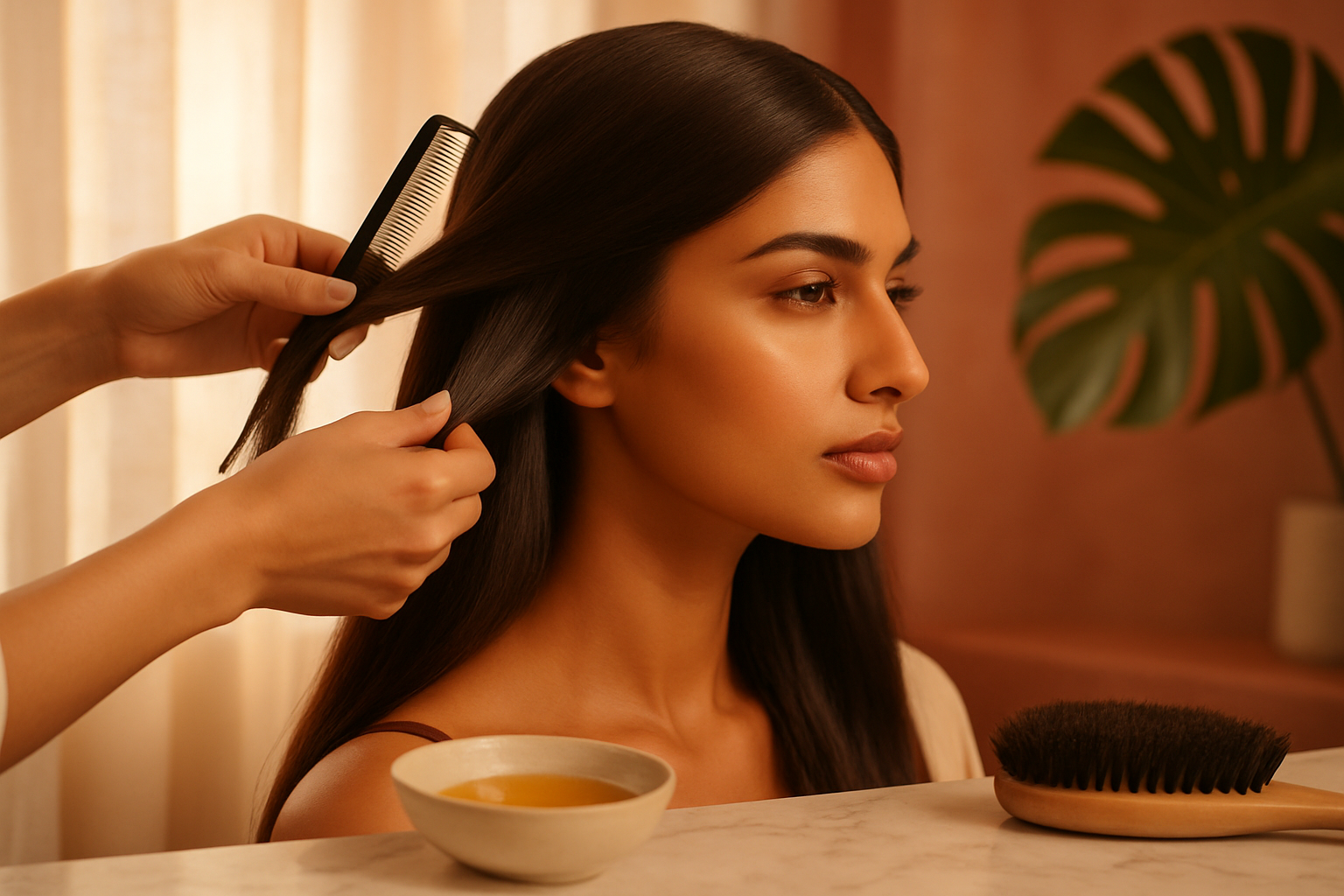
- Moisture masks, twice weekly. Rich masks with shea butter, panthenol or ceramides. Apply from mid-length to ends, never on the scalp. Comb through with a wide-tooth comb so every strand is coated.
- Oil the night before wash day. Warm coconut or a light argan-almond blend, massaged in with fingertips for five minutes, left overnight. This is the one grandmother-approved step that actually has strong evidence behind it — coconut oil is one of the few oils that penetrates the cortex rather than just sitting on top.
If you want to compress the timeline, an in-salon hair treatment using professional-strength masks under steam does in one sitting what four home washes will do. Steam opens the cuticle just enough for the mask to reach the cortex, which is why the shine post-salon looks different from your bathroom version.
Address the Shedding — Without Panicking
Most brides notice heavy hair fall around 6 to 12 weeks after the wedding, not immediately. This is called telogen effluvium and it's your body's response to the physical and emotional stress of the last few months. It is almost always temporary.
What helps:
- Iron, ferritin and vitamin D bloodwork. Low iron is the single biggest driver of hair fall in Pakistani women. Fix the numbers, fix the fall.
- Protein at every meal. Aim for 60–80g a day. Hair is protein; you can't grow it out of chai and toast.
- Scalp massage, 5 minutes daily. Dry, with fingertips. It sounds too simple to work. It works.
- Silk or satin pillowcase. Reduces the friction that snaps already weakened strands overnight.
What doesn't help: panic-buying seven serums off Instagram. Pick one scalp serum with proven ingredients (rosemary, peptides, caffeine or minoxidil if a dermatologist prescribes it) and use it consistently for 12 weeks before you judge it.
Month 2: The Right Time for a Smoothing Treatment
Once your scalp is calm and you've done three to four weeks of masks, now you can consider a smoothing service — not before. Your hair needs to be strong enough to hold the treatment.
Options we recommend post-wedding:
- A gentle keratin if your hair is frizzy but not chemically over-processed. It seals the cuticle and gives you six to eight weeks of easy air-dry mornings, which means you naturally stop reaching for heat tools.
- A hair botox or protein-glaze if you had colour done for the wedding and your ends are porous. This is a non-formaldehyde deep-repair rather than a smoothing service.
- A cysteine treatment if you want softness without the pin-straight effect.
Our team walks you through which one suits your specific damage during a consultation — you can book that as part of a regular hair service visit, no commitment to any treatment on the day.
The Haircut Conversation
Most brides beg us not to cut. We understand. But the fried 2–3 inches at the very bottom are dragging the health of the whole length down. A dusting (half inch) minimum, ideally a proper inch off, will make your hair look thicker, shinier and grow faster because it stops splits travelling up the shaft.
If you had extensions put in for the events and they've now been removed, book a shaping cut two weeks after removal — this gives the natural hair time to settle so the stylist can see the real line.
When to Come In vs Stay Home
Handle at home: mild dryness, a bit of frizz, needing a trim.
Come see a stylist if: your scalp is still sore two weeks post-wedding, you're seeing small bald patches, hair is snapping when you brush it wet, or your colour has turned brassy and dry at the same time. These are the situations where DIY makes it worse and a professional assessment saves you months.
Recovery isn't dramatic — it's boring, consistent, and takes about eight weeks to see real change. But you'll get your hair back. Brides who follow this plan usually tell us their hair feels better six months after the wedding than it did before, mostly because they finally started treating it properly.