· 5 min read
Sugar Wax vs Fruit Wax vs Traditional Wax: Which Is Gentlest?
A senior stylist's honest breakdown of sugar, fruit and traditional waxes — how each behaves on Lahore skin, and which one actually suits sensitive, dry or dark-prone areas.
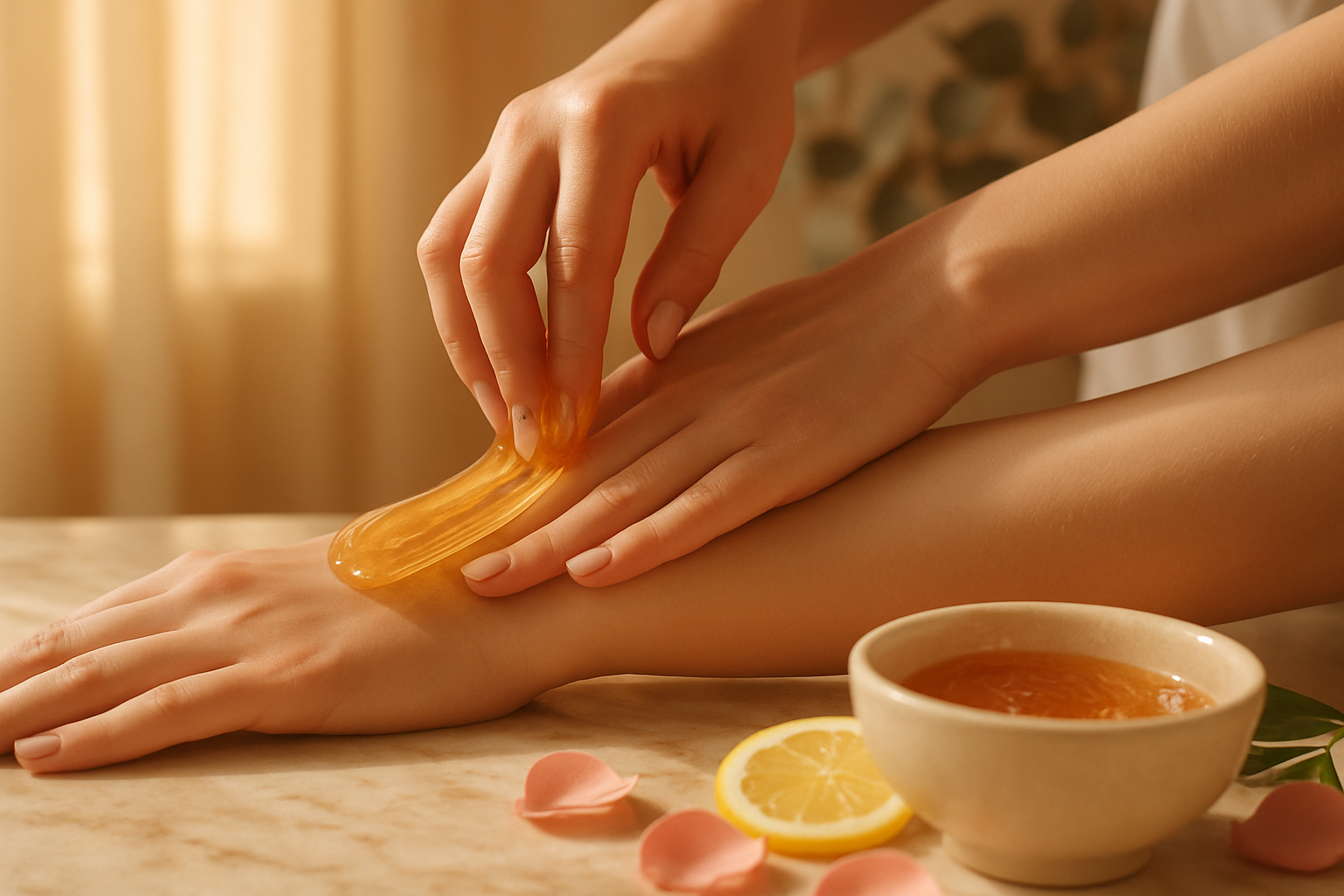
Waxing is one of those grooming decisions that seems simple until you're standing at the salon menu deciding between organic sugar, fruit wax and the classic honey-based traditional wax. In Lahore, where heat, humidity and pollution already leave skin reactive, the wax you choose genuinely matters — not just for smoothness, but for how your skin looks two weeks later. As someone who has waxed thousands of arms, legs and underarms in DHA, I can tell you the difference is real, and it's rarely explained honestly.
So let's do that here. No brand loyalty, no marketing fluff — just what each wax actually does on South Asian skin, who it suits, and where each one falls short.
The Three Waxes, Honestly Explained
Before we compare, it helps to understand what you're actually putting on your skin.
Sugar wax (sugaring paste) is a simple mixture of sugar, lemon and water, cooked into a thick amber paste. It's applied lukewarm — often barely warm at all — against the direction of hair growth, and flicked off with the direction. This is the opposite of traditional waxing.
Fruit wax is a softer wax infused with fruit extracts like berries, plum or papaya, plus vitamins and oils. It's applied warm, removed with a strip, but is noticeably less aggressive than standard salon wax. It's the middle child — kinder than traditional, easier to work with than sugar.
Traditional wax in Pakistani salons is usually a honey or rosin-based hot wax applied warm and pulled off with cloth strips. It grips hair firmly (which is why it works so well on stubborn coarse hair) but it also grips skin.
Which One Actually Hurts Less?
Honestly? Sugar wins on gentleness, but not always on comfort. Here's the nuance most people miss.
- Sugar wax only bonds to hair and dead skin cells, not living skin. That means less trauma when it's pulled off, less redness, and far less risk of the tiny bruise-like marks some women get on their inner thighs and underarms.
- Fruit wax is a close second. The lower application temperature is a genuine relief in Lahore summers, and the added oils leave skin feeling conditioned rather than stripped.
- Traditional wax pulls the hardest. On coarse or stubborn hair it's efficient, but on thin facial hair, underarms or the bikini area, it can leave real irritation for 24–48 hours.
If you regularly wax and end up with red bumps, darkening or that stinging tightness afterwards, your skin is telling you the wax is too aggressive for it. Our clients who switch to waxing with organic sugar almost always report calmer skin within two sessions.
The Pigmentation Question (Very Important for Lahori Skin)
South Asian skin is reactive. Any trauma — friction, heat, tugging — can trigger post-inflammatory hyperpigmentation, especially in the underarms, bikini line and upper lip. This is why so many women in Lahore complain of dark underarms despite regular grooming: the wax itself is contributing.
How each wax affects pigmentation
- Sugar wax — lowest pigmentation risk. Because it doesn't stick to living skin, the repeated micro-trauma that darkens sensitive areas is largely avoided.
- Fruit wax — low to moderate risk. The fruit extracts and oils reduce inflammation, and the strip pulls less aggressively than traditional wax.
- Traditional wax — highest risk on sensitive areas. Fine for legs and arms on most people, but I don't recommend it long-term for underarms, bikini or face.
If your underarms are already deeper in tone than the rest of your body, this alone is a reason to switch. Pair the switch with a gentle brightening routine and you'll see change within 6–8 weeks.
Ingrown Hairs, Regrowth and Smoothness
Gentleness is important, but so is result. What's the point of a comfortable wax if you're stubbly in five days?
- Sugar wax removes hair from the root and, over time, weakens the follicle. Regrowth is finer, slower, and ingrowns are noticeably fewer because the paste exfoliates as it's flicked off.
- Fruit wax performs similarly to traditional wax on regrowth — 2 to 3 weeks of smoothness for most women — but with fewer ingrowns thanks to the moisturising formula.
- Traditional wax gives the cleanest immediate finish on coarse hair, which is why it's still the go-to for full-body waxing before an event. But ingrowns are more common, especially on the thighs and bikini area.
Many of our long-term clients now alternate: fruit wax for the body in humid months, sugar for underarms and bikini year-round.
Which Wax Should You Actually Book?
Here's how I'd advise a client sitting in my chair in DHA Phase 3:
Choose sugar wax if:
- You have sensitive, reactive or eczema-prone skin
- You're waxing underarms, bikini or face
- You're worried about pigmentation or dark patches
- You've had bad reactions to traditional wax before
- You want the gentlest option in summer heat
Choose fruit wax if:
- You have normal to slightly dry skin
- You want a comfortable, conditioning experience
- You're doing full arms and legs and want efficiency without harshness
- You dislike the sticky residue traditional wax can leave
Choose traditional wax if:
- Your hair is very coarse and stubborn
- You're doing a one-off pre-event full-body wax
- Your skin has historically tolerated it without darkening
And for the face specifically — upper lip, sides, chin — I almost always recommend threading or fruit wax over traditional hot wax. The skin there is too delicate for the pull of standard wax, and repeated sessions can loosen the fine skin around the mouth over years.
Aftercare That Actually Matters
Whichever wax you choose, the 48 hours after are where good skin is made or ruined.
- Skip hot showers, gym and sauna for 24 hours — open follicles are vulnerable to bacteria and darkening.
- No perfume, deodorant or scrubs on the waxed area for a day.
- Cool aloe or a fragrance-free moisturiser twice on day one, then daily.
- Start gentle exfoliation on day 4 — a soft washcloth or a mild AHA — to prevent ingrowns before they form.
- Sunscreen on exposed waxed skin. Freshly waxed skin pigments faster in Lahore's UV.
Do this consistently and you'll see the compounding benefit: smoother regrowth, no dark patches, no bumpy days three and four.
The Short Answer
Sugar wax is the gentlest. Fruit wax is the most comfortable everyday choice for most women. Traditional wax still has a place — but not on your most delicate skin, and not every single time. Match the wax to the area and your skin's history, and waxing stops being a chore you dread and becomes a genuinely skin-improving ritual.